William Duddell: Difference between revisions
CSV import |
CSV import |
||
| Line 30: | Line 30: | ||
{{Physics-biography-stub}} | {{Physics-biography-stub}} | ||
{{Electrical-engineering-stub}} | {{Electrical-engineering-stub}} | ||
<gallery> | |||
File:Oscillograph_Duddell_Moving_Coil.png|William Duddell's Moving Coil Oscillograph | |||
File:Oscillograph_Time-Index_Generator.png|Time-Index Generator for Oscillograph | |||
File:Oscillograph_Cinematograph_Camera.png|Cinematograph Camera for Oscillograph | |||
File:Oscillograph_recorded_on_film.png|Oscillograph Recorded on Film | |||
</gallery> | |||
Latest revision as of 04:28, 18 February 2025
William Duddell (1872–1917) was a British physicist and electrical engineer, renowned for his pioneering work in the field of electrical oscillations and acoustics. His most notable invention, the Singing Arc, was a significant advancement in the early study of electrical engineering and physics, laying the groundwork for future developments in radio and audio technology.
Early Life and Education[edit]
William Du Bois Duddell was born in London in 1872. From a young age, Duddell showed a keen interest in science and engineering, which led him to pursue studies in these fields. He received his education at the City and Guilds Technical College in London, where he excelled in his studies and demonstrated a particular aptitude for electrical engineering.
Career and Inventions[edit]
Duddell's career was marked by his innovative approach to electrical engineering. In 1899, while investigating the properties of the electric arc for the Institution of Electrical Engineers (IEE), Duddell discovered the phenomenon of the Singing Arc. This discovery allowed him to create an arc lamp that could produce musical tones without any moving parts, simply by modulating the current passing through the arc. This invention not only showcased Duddell's ingenuity but also contributed significantly to the understanding of electrical oscillations and resonance.
Beyond the Singing Arc, Duddell continued to contribute to the field of electrical engineering through his work on oscillographs for measuring electrical currents and his studies on the stability of electrical systems. His research and inventions laid important foundations for the development of electronic communication and broadcasting technologies.
Legacy[edit]
William Duddell's contributions to electrical engineering and physics were widely recognized during his lifetime. He was awarded the Hughes Medal by the Royal Society in 1909 for his discoveries in the field of alternating electrical currents. Despite his early death in 1917, Duddell's work continued to influence the fields of electrical engineering and acoustics for decades, paving the way for future innovations in electronic communication and audio technology.
Duddell's legacy is remembered not only through his contributions to science and engineering but also through the Duddell Medal and Prize, established in his honor by the Institution of Electrical Engineers. This award recognizes outstanding contributions to the advancement of knowledge in the fields of electrical engineering and the physical sciences.
See Also[edit]

This electrical engineering related article is a stub.
-
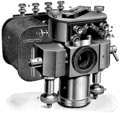 William Duddell's Moving Coil Oscillograph
 -
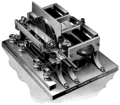 Time-Index Generator for Oscillograph
 -
 Cinematograph Camera for Oscillograph
 -
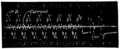 Oscillograph Recorded on Film


