Vachellia rigidula: Difference between revisions
CSV import |
CSV import |
||
| (One intermediate revision by the same user not shown) | |||
| Line 1: | Line 1: | ||
== Vachellia rigidula == | |||
[[File:Acacia_rigidula.jpg|thumb|Vachellia rigidula tree]] | |||
[[File:Acacia_rigidula_seeds.jpg|thumb|Seeds of Vachellia rigidula]] | |||
[[File:Acacia-rigidula-branch.jpg|thumb|Branch of Vachellia rigidula]] | |||
[[File:Acacia-rigidula-bark.jpg|thumb|Bark of Vachellia rigidula]] | |||
'''Vachellia rigidula''', commonly known as blackbrush acacia, is a species of shrub or small tree in the family [[Fabaceae]]. It is native to the southwestern [[United States]] and [[Mexico]], particularly in the regions of [[Texas]] and [[Coahuila]]. | |||
'''Vachellia rigidula''' is | |||
== | == Description == | ||
Vachellia rigidula is a multi-stemmed shrub or small tree that typically grows to a height of 5 to 15 feet. The branches are armed with sharp thorns, and the bark is dark and rough. The leaves are bipinnate, with small leaflets that are dark green in color. The plant produces small, yellow flowers that are arranged in spherical clusters. These flowers are followed by flat, brown seed pods. | |||
==Conservation== | == Habitat == | ||
This species is commonly found in arid and semi-arid regions, thriving in rocky soils and limestone hills. It is well adapted to the hot, dry climates of the southwestern United States and northern Mexico. Vachellia rigidula is often found in association with other desert plants such as [[cacti]] and [[yucca]]. | |||
== Uses == | |||
Vachellia rigidula has been used traditionally by indigenous peoples for various purposes. The wood is hard and dense, making it suitable for use as fuel. The plant is also known for its potential medicinal properties, although scientific studies are limited. | |||
== Chemical Composition == | |||
The plant is notable for containing a variety of alkaloids and other chemical compounds. Some of these compounds have been studied for their potential effects on the central nervous system. However, the presence of these chemicals has also raised concerns about the safety of using Vachellia rigidula in dietary supplements. | |||
== Conservation == | |||
Vachellia rigidula is not currently listed as a threatened species. However, its habitat is subject to pressures from land development and agricultural expansion. Conservation efforts focus on preserving the natural habitats where this species occurs. | |||
== Related pages == | |||
* [[Fabaceae]] | * [[Fabaceae]] | ||
* [[ | * [[Acacia]] | ||
* [[Desert | * [[Desert plants]] | ||
* | |||
== References == | |||
* Seigler, D. S., & Ebinger, J. E. (2005). "Taxonomic revision of the genus Vachellia (Fabaceae: Mimosoideae) in the New World." *Brittonia*, 57(4), 354-377. | |||
* Turner, B. L. (2009). "Vascular Plants of Texas: A Comprehensive Checklist including Synonymy, Bibliography, and Index." *Phytologia Memoirs*, 16. | |||
[[Category: | [[Category:Vachellia]] | ||
[[Category:Flora of the | [[Category:Flora of the United States]] | ||
[[Category:Flora of Mexico]] | [[Category:Flora of Mexico]] | ||
<gallery> | |||
File:Acacia_rigidula.jpg|Vachellia rigidula | |||
File:Acacia_rigidula_seeds.jpg|Seeds of Vachellia rigidula | |||
File:Acacia-rigidula-branch.jpg|Branch of Vachellia rigidula | |||
File:Acacia-rigidula-bark.jpg|Bark of Vachellia rigidula | |||
</gallery> | |||
Latest revision as of 05:02, 18 February 2025
Vachellia rigidula[edit]


Vachellia rigidula, commonly known as blackbrush acacia, is a species of shrub or small tree in the family Fabaceae. It is native to the southwestern United States and Mexico, particularly in the regions of Texas and Coahuila.
Description[edit]
Vachellia rigidula is a multi-stemmed shrub or small tree that typically grows to a height of 5 to 15 feet. The branches are armed with sharp thorns, and the bark is dark and rough. The leaves are bipinnate, with small leaflets that are dark green in color. The plant produces small, yellow flowers that are arranged in spherical clusters. These flowers are followed by flat, brown seed pods.
Habitat[edit]
This species is commonly found in arid and semi-arid regions, thriving in rocky soils and limestone hills. It is well adapted to the hot, dry climates of the southwestern United States and northern Mexico. Vachellia rigidula is often found in association with other desert plants such as cacti and yucca.
Uses[edit]
Vachellia rigidula has been used traditionally by indigenous peoples for various purposes. The wood is hard and dense, making it suitable for use as fuel. The plant is also known for its potential medicinal properties, although scientific studies are limited.
Chemical Composition[edit]
The plant is notable for containing a variety of alkaloids and other chemical compounds. Some of these compounds have been studied for their potential effects on the central nervous system. However, the presence of these chemicals has also raised concerns about the safety of using Vachellia rigidula in dietary supplements.
Conservation[edit]
Vachellia rigidula is not currently listed as a threatened species. However, its habitat is subject to pressures from land development and agricultural expansion. Conservation efforts focus on preserving the natural habitats where this species occurs.
Related pages[edit]
References[edit]
- Seigler, D. S., & Ebinger, J. E. (2005). "Taxonomic revision of the genus Vachellia (Fabaceae: Mimosoideae) in the New World." *Brittonia*, 57(4), 354-377.
- Turner, B. L. (2009). "Vascular Plants of Texas: A Comprehensive Checklist including Synonymy, Bibliography, and Index." *Phytologia Memoirs*, 16.
-
 Vachellia rigidula
 -
 Seeds of Vachellia rigidula
 -
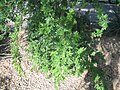 Branch of Vachellia rigidula
 -
 Bark of Vachellia rigidula
