GJA1: Difference between revisions
CSV import |
CSV import |
||
| Line 27: | Line 27: | ||
[[Category:Cardiovascular system]] | [[Category:Cardiovascular system]] | ||
{{Medicine-stub}} | {{Medicine-stub}} | ||
== GJA1 == | |||
<gallery> | |||
File:PDB_1r5s_EBI.jpg|GJA1 | |||
File:RF00487.jpg|GJA1 | |||
File:Microphotograph_of_connexin_43_distribution_in_the_rat_myocardium.jpg|Microphotograph of connexin 43 distribution in the rat myocardium | |||
</gallery> | |||
Latest revision as of 01:11, 18 February 2025
GJA1 or Gap Junction Alpha-1 Protein is a protein that in humans is encoded by the GJA1 gene. This protein is also commonly known as connexin 43 (Cx43) due to its molecular weight. GJA1 is crucial in the formation of gap junctions, which are specialized intercellular connections that facilitate the direct transfer of ions and small molecules between the cytoplasm of adjacent cells. This process is essential for various physiological functions, including cardiac conduction, vascular tone regulation, and the development of tissues and organs.
Function[edit]
GJA1 plays a pivotal role in the cardiovascular system, where it contributes to the propagation of electrical impulses across the heart, ensuring coordinated heart muscle contractions and maintaining normal heart rhythm. In the vascular system, GJA1-mediated gap junctions are involved in the regulation of vascular tone and blood pressure. Beyond the cardiovascular system, GJA1 is also important in the development and function of other tissues, including the brain, where it participates in neurodevelopment and the maintenance of the blood-brain barrier.
Genetic and Molecular Basis[edit]
The GJA1 gene is located on chromosome 6q22.31 in humans. Mutations in this gene have been associated with several medical conditions, including oculodentodigital dysplasia (ODDD), a rare genetic disorder that affects the development of the eyes, teeth, and fingers. Additionally, alterations in GJA1 expression and function have been implicated in various cardiovascular diseases, such as heart failure and arrhythmias, as well as in cancer progression and wound healing processes.
Clinical Significance[edit]
Understanding the role of GJA1 and its encoded protein, connexin 43, has significant clinical implications. For instance, targeting GJA1-mediated communication has been explored as a therapeutic strategy in cardiovascular diseases, to either enhance or inhibit gap junctional communication depending on the pathological context. In cancer, strategies to modulate GJA1 expression or function are being investigated to prevent tumor progression and metastasis.
Research Directions[edit]
Research on GJA1 continues to uncover its complex roles in health and disease. Studies are ongoing to better understand how GJA1-mediated intercellular communication influences disease progression and response to therapy in various conditions. Additionally, the development of drugs that can specifically target GJA1 functions holds promise for novel therapeutic approaches in diseases associated with GJA1 dysfunction.
See Also[edit]
References[edit]
<references/>

GJA1[edit]
-
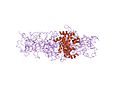 GJA1
GJA1 -
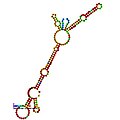 GJA1
GJA1 -
 Microphotograph of connexin 43 distribution in the rat myocardium


