Fasting girl: Difference between revisions
CSV import |
CSV import |
||
| (One intermediate revision by the same user not shown) | |||
| Line 27: | Line 27: | ||
{{medicine-stub}} | {{medicine-stub}} | ||
== Fasting girl == | |||
<gallery> | |||
File:Mollie_fancher_bed.jpg | |||
File:Sarah_jacob.jpg | |||
</gallery> | |||
<gallery> | |||
File:Mollie_fancher_bed.jpg|Mollie Fancher bed | |||
File:Sarah_jacob.jpg|Sarah Jacob | |||
</gallery> | |||
Latest revision as of 11:22, 25 February 2025
Fasting Girl refers to a phenomenon that gained public and medical attention primarily in the 19th century, involving young women who claimed to survive for long periods of time without consuming food or, in some cases, water. These claims were often associated with religious or spiritual significance, suggesting divine intervention or miraculous abilities. The fasting girls became subjects of public fascination, medical inquiry, and, in some instances, skepticism and controversy.
Historical Context[edit]
The phenomenon of fasting girls is not confined to a single culture or era, but instances became particularly notable during the Victorian era in Europe and America. This period was characterized by a deep interest in spiritualism, religious fervor, and the beginnings of a more scientific approach to medicine. Fasting girls were often interpreted through these lenses, with some viewing them as saints or mystics, and others as subjects for medical study or even as frauds.
Medical Investigations[edit]
Many fasting girls were subjected to medical observation to verify their claims. These investigations varied in their rigor and conclusions. Some physicians reported being unable to find evidence of food consumption, while others accused the girls or their families of deception. The medical community was divided, with no consensus on whether or not the phenomenon was genuine.
Notable Cases[edit]
One of the most famous fasting girls was Sarah Jacob, the "Welsh Fasting Girl," who claimed to have lived without food since the age of ten. Her case attracted widespread media attention and medical interest until her death in 1869, after a period of strict medical observation during which she was not allowed to eat. Her death was attributed to starvation, and it led to a public outcry against the practice of fasting and the promotion of such phenomena without scientific evidence.
Psychological and Social Interpretations[edit]
Modern interpretations of the fasting girl phenomenon often view it through the lens of psychological, social, and cultural factors. Some scholars suggest that these cases may have been manifestations of eating disorders such as anorexia nervosa, understood within the context of the societal pressures and religious expectations of the time. Others view the fasting girls as engaging in a form of performance or protest, consciously or unconsciously challenging the roles and expectations placed upon women in their societies.
Legacy[edit]
The fasting girl phenomenon left a lasting impact on the fields of medicine, psychology, and cultural studies. It highlighted the complexities of diagnosing and understanding disorders at the intersection of physical and mental health, and it raised questions about the influence of societal and cultural expectations on individual behavior. The cases of fasting girls continue to be studied as historical examples of how medical, religious, and social factors can intertwine.
See Also[edit]

Fasting girl[edit]


-
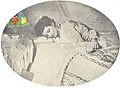 Mollie Fancher bed
 -
 Sarah Jacob
