Erosion: Difference between revisions
CSV import Tags: mobile edit mobile web edit |
CSV import |
||
| Line 35: | Line 35: | ||
[[Category:Environmental science]] | [[Category:Environmental science]] | ||
{{stb}} | {{stb}} | ||
<gallery> | |||
File:Eroding_rill_in_field_in_eastern_Germany.jpg|Eroding rill in field in eastern Germany | |||
File:KharazaArch.jpg|Kharaza Arch | |||
File:大连国家地质公园9-海蚀崖.JPG|Dalian National Geopark sea erosion cliff | |||
File:Water_and_soil_splashed_by_the_impact_of_a_single_raindrop.jpg|Water and soil splashed by the impact of a single raindrop | |||
File:Rummu_aherainemägi2.jpg|Rummu ash hill | |||
File:Dobbingstone_Burn_-_geograph.org.uk_-_1291882.jpg|Dobbingstone Burn | |||
File:Tauglbach_4.JPG|Tauglbach | |||
File:Green_land_soil_erosion.jpg|Green land soil erosion | |||
File:Wavecut_platform_southerndown_pano.jpg|Wavecut platform Southerndown | |||
File:Erosion_of_Boulder_Clay_in_Filey_Bay.JPG|Erosion of Boulder Clay in Filey Bay | |||
File:Sea_dune_Erosion_at_Talace,_Wales.webm|Sea dune erosion at Talace, Wales | |||
File:Pirunpesä_Jalasjärvi_8.JPG|Pirunpesä Jalasjärvi | |||
</gallery> | |||
Latest revision as of 21:22, 23 February 2025
Erosion refers to the process by which the surface of the Earth is worn away by the action of water, wind, ice, or living organisms. Erosion can significantly impact the environment, altering landscapes, affecting ecosystems, and even influencing climate patterns. While erosion is a natural process, human activities such as deforestation, agriculture, and urban development have accelerated its rate, leading to environmental concerns such as soil degradation, loss of fertile land, and sedimentation of waterways.
Types of Erosion[edit]
Erosion can be classified into several types based on the eroding agent:
- Water Erosion: The removal of soil by water, which can occur through rainfall, surface runoff, and the flow of rivers and streams. Water erosion is the most common form and can lead to the formation of valleys, canyons, and deltas.
- Wind Erosion: The removal of soil and rock particles by wind. This type of erosion can create unique landforms such as dunes and loess deposits.
- Glacial Erosion: The process by which glaciers erode the landscape, sculpting mountains and carving out valleys through processes like plucking and abrasion.
- Coastal Erosion: The wearing away of land and the removal of beach or dune sediments by wave action, tidal currents, or sea level rise.
- Biological Erosion: The breakdown of rocks and minerals by living organisms, such as the burrowing of animals or the root growth of plants.
Causes of Erosion[edit]
Erosion is influenced by a variety of natural and anthropogenic factors:
- Natural Factors: These include climatic conditions such as rainfall intensity and wind speed, topography, types of soil and rock, and vegetation cover.
- Human Activities: Land use changes like deforestation, agricultural practices, construction, and mining activities can significantly increase erosion rates by disturbing the soil and reducing vegetation cover.
Effects of Erosion[edit]
The effects of erosion can be both beneficial and detrimental:
- Beneficial Effects: Erosion is part of natural geological processes that shape the Earth's landscape, creating diverse habitats and contributing to soil formation in some ecosystems.
- Detrimental Effects: Excessive erosion can lead to soil degradation, reduced agricultural productivity, loss of habitat, increased risk of floods, and sedimentation of water bodies, affecting water quality and aquatic life.
Prevention and Control[edit]
Efforts to prevent or control erosion focus on maintaining or restoring natural vegetation, managing water flow, and employing engineering solutions:
- Vegetation Management: Planting trees, grasses, and other plants can help anchor the soil and absorb water, reducing runoff and soil loss.
- Water Management: Techniques such as contour plowing, terracing, and the construction of retention basins can help manage water flow and reduce erosion.
- Engineering Solutions: Structures like sea walls, gabions, and riprap can be used to protect vulnerable areas from wind and water erosion.
Conclusion[edit]
Erosion is a complex natural process that plays a crucial role in shaping the Earth's surface. However, human activities have accelerated erosion rates, leading to significant environmental challenges. Effective management and conservation practices are essential to mitigate the adverse effects of erosion and protect the planet's ecosystems and resources.
| This article is a stub. You can help WikiMD by registering to expand it. |
-
 Eroding rill in field in eastern Germany
 -
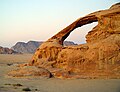 Kharaza Arch
 -
 Dalian National Geopark sea erosion cliff
 -
 Water and soil splashed by the impact of a single raindrop
 -
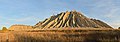 Rummu ash hill
 -
 Dobbingstone Burn
 -
 Tauglbach
 -
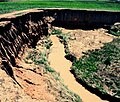 Green land soil erosion
 -
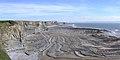 Wavecut platform Southerndown
 -
 Erosion of Boulder Clay in Filey Bay
 -
 Sea dune erosion at Talace, Wales
 -
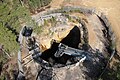 Pirunpesä Jalasjärvi


