Ganesha (psychedelic): Difference between revisions
CSV import Tags: mobile edit mobile web edit |
CSV import |
||
| Line 27: | Line 27: | ||
{{Psychoactive drug-stub}} | {{Psychoactive drug-stub}} | ||
{{medicine-stub}} | {{medicine-stub}} | ||
<gallery> | |||
File:3C-G-3.png|Ganesha (psychedelic) | |||
File:3C-G-4.png|Ganesha (psychedelic) | |||
File:3C-G-N.png|Ganesha (psychedelic) | |||
</gallery> | |||
Latest revision as of 01:59, 18 February 2025
Ganesha is a psychedelic compound of the tryptamine class. Named after the Hindu deity Ganesha, it is a synthetic substance that is chemically similar to other tryptamines such as DMT, psilocybin, and LSD.
Chemistry[edit]
Ganesha is a member of the phenethylamine and tryptamine chemical classes. It is structurally similar to other psychedelic tryptamines such as DMT and psilocybin, but it also shares some characteristics with phenethylamine psychedelics like mescaline. The exact chemical structure of Ganesha is not publicly known, but it is believed to contain a tryptamine backbone with additional functional groups that enhance its psychedelic effects.
Pharmacology[edit]
Like other tryptamines, Ganesha is believed to act primarily as a serotonin receptor agonist. This means it binds to and activates certain serotonin receptors in the brain, leading to its psychedelic effects. However, the exact pharmacological action of Ganesha is not well understood, and more research is needed to fully understand its effects on the brain and body.
Effects[edit]
The effects of Ganesha are reported to be intense and long-lasting, with a strong visual component. Users often report altered perceptions of time and space, intense visual hallucinations, and profound changes in thought and emotion. However, these effects can vary greatly depending on the individual, the dose taken, and the context in which the drug is used.
Risks[edit]
As with any psychedelic substance, using Ganesha carries risks. These can include psychological distress, dangerous behavior, and negative physical effects such as nausea and increased heart rate. It is also possible to have a "bad trip," in which the user experiences intense fear, paranoia, or even psychosis.
Legal Status[edit]
The legal status of Ganesha varies by country. In many places, it is classified as a controlled substance and its possession, sale, or use is illegal. However, in some countries, it is legal or unregulated.
See Also[edit]
This article is a Psychoactive drug-related stub. You can help WikiMD by expanding it!

-
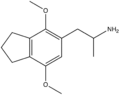 Ganesha (psychedelic)
 -
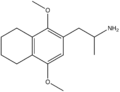 Ganesha (psychedelic)
 -
 Ganesha (psychedelic)


