Vascular remodelling in the embryo: Difference between revisions
CSV import Tags: mobile edit mobile web edit |
CSV import |
||
| Line 33: | Line 33: | ||
{{anatomy-stub}} | {{anatomy-stub}} | ||
<gallery> | |||
File:Stages of vascular development.png|Vascular remodelling in the embryo | |||
File:Gray23.png|Vascular remodelling in the embryo | |||
File:Gray491.png|Vascular remodelling in the embryo | |||
File:Cartilage forces.jpg|Vascular remodelling in the embryo | |||
File:Separating-two-plates-pressure-gradient-and-shear-stress.png|Vascular remodelling in the embryo | |||
File:Ideal feedback model.svg|Vascular remodelling in the embryo | |||
File:Neuropilin-2 (Nrp2) expression in normal breast and breast carcinoma tissue.jpg|Vascular remodelling in the embryo | |||
</gallery> | |||
Latest revision as of 01:18, 20 February 2025
Vascular Remodelling in the Embryo
Vascular remodelling in the embryo is a critical process that involves the transformation of the primitive vascular network into a complex, hierarchically organized system of blood vessels. This process is essential for the proper development and function of the embryo and is regulated by a variety of molecular signals and mechanical forces.
Overview[edit]
The initial vascular network in the embryo is formed through a process known as vasculogenesis, where endothelial cells differentiate from angioblasts and coalesce to form a primitive vascular plexus. This plexus then undergoes extensive remodelling to form the mature vascular system, a process that involves the pruning of unnecessary vessels, the enlargement of others, and the formation of new branches through angiogenesis.
Regulation of Vascular Remodelling[edit]
Vascular remodelling is regulated by a complex interplay of molecular signals and mechanical forces. Key molecular regulators include vascular endothelial growth factor (VEGF) and angiopoietins, which promote endothelial cell proliferation and migration, and Notch signaling, which regulates the specification of arterial and venous identities.
Mechanical forces, such as blood flow and shear stress, also play a crucial role in vascular remodelling. These forces influence the behaviour of endothelial cells and contribute to the patterning of the vascular network.
Clinical Significance[edit]
Defects in vascular remodelling can lead to a variety of congenital heart diseases and other vascular anomalies. Understanding the mechanisms underlying vascular remodelling is therefore crucial for the development of therapeutic strategies for these conditions.
See Also[edit]
References[edit]
External Links[edit]

-
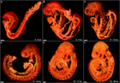 Vascular remodelling in the embryo
 -
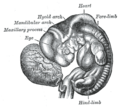 Vascular remodelling in the embryo
 -
 Vascular remodelling in the embryo
 -
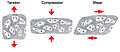 Vascular remodelling in the embryo
 -
 Vascular remodelling in the embryo
 -
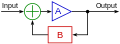 Vascular remodelling in the embryo
 -
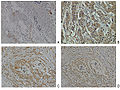 Vascular remodelling in the embryo


_expression_in_normal_breast_and_breast_carcinoma_tissue.jpg)
