Procellariiformes: Difference between revisions
CSV import |
CSV import |
||
| Line 28: | Line 28: | ||
[[Category:Seabirds]] | [[Category:Seabirds]] | ||
{{Bird-stub}} | {{Bird-stub}} | ||
<gallery> | |||
File:Thalassarche_bulleri_in_flight_3_-_SE_Tasmania.jpg|Procellariiformes | |||
File:Pterodroma_macroptera_Godman.jpg|Procellariiformes | |||
File:070226_southern_royal_albatross_off_Kaikoura_2.jpg|Procellariiformes | |||
File:Whitefacedstormpetrel1.jpg|Procellariiformes | |||
File:Xmas_shearwaters_roosting.jpg|Procellariiformes | |||
File:Kerguelen_-_Diomedea_exulans_-_wooing.jpg|Procellariiformes | |||
File:W-tail_with_chick.jpg|Procellariiformes | |||
File:Feeding_chick.JPG|Procellariiformes | |||
File:The_Albatross_about_my_Neck_was_Hung_by_William_Strang.jpg|Procellariiformes | |||
File:Bird's_Eggs_from_Sea-Cliffs_tail-piece_in_Bewick_British_Birds_1804.jpg|Procellariiformes | |||
File:Oceanites_maorianus.jpg|Procellariiformes | |||
File:Albatross_hook.jpg|Procellariiformes | |||
</gallery> | |||
Latest revision as of 11:59, 18 February 2025
Procellariiformes is an order of seabirds that includes four families: the albatrosses, petrels, storm petrels, and diving petrels. With over 100 species, they are an incredibly diverse group of birds, known for their ability to fly long distances over the open ocean.
Characteristics[edit]
Procellariiformes are characterized by their long, narrow wings and tube-like nostrils, which are used for an exceptional sense of smell. This is unusual among birds, as most rely more heavily on sight. They are also known for their ability to drink seawater, thanks to specialized salt glands that filter out the salt.
Distribution and Habitat[edit]
Procellariiformes are found throughout the world's oceans, with the highest diversity in the Southern Hemisphere. They are pelagic, spending most of their lives at sea, only coming to land to breed. Breeding colonies are often located on remote islands, free from land predators.
Behavior and Diet[edit]
Procellariiformes are known for their impressive flight abilities, using a technique called dynamic soaring to travel long distances with minimal effort. They feed on a diet of fish, squid, and other marine life, often diving to great depths to catch their prey.
Conservation[edit]
Many species of Procellariiformes are threatened by human activities, including fishing, pollution, and climate change. Conservation efforts are underway to protect these remarkable birds and their ocean habitats.
See Also[edit]

-
 Procellariiformes
 -
 Procellariiformes
 -
 Procellariiformes
 -
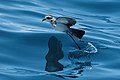 Procellariiformes
 -
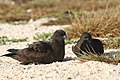 Procellariiformes
 -
 Procellariiformes
 -
 Procellariiformes
 -
 Procellariiformes
 -
 Procellariiformes
 -
 Procellariiformes
 -
 Procellariiformes
 -
 Procellariiformes


