Thalia geniculata: Difference between revisions
CSV import |
CSV import |
||
| (One intermediate revision by the same user not shown) | |||
| Line 1: | Line 1: | ||
{{short description|A comprehensive overview of the plant species ''Thalia geniculata''}} | |||
== | ==Overview== | ||
'''Thalia geniculata''' | '''''Thalia geniculata''''', commonly known as bent alligator-flag, is a perennial plant species belonging to the family [[Marantaceae]]. It is native to tropical and subtropical regions of the Americas and Africa. This plant is notable for its striking appearance and its ecological role in wetland habitats. | ||
== | ==Description== | ||
[[File:Thalia_geniculata.JPG|thumb|right|''Thalia geniculata'' in its natural habitat]] | |||
''Thalia geniculata'' is characterized by its tall, erect stems that can reach heights of up to 3 meters. The leaves are large, lanceolate, and have a distinctive blue-green color. The plant produces purple flowers that are arranged in panicles, which are supported by long, arching peduncles. The flowers are followed by small, round fruits. | |||
== | ==Habitat== | ||
This species thrives in wetland environments, including marshes, swamps, and along the edges of ponds and rivers. It prefers full sun to partial shade and can tolerate a range of soil types, provided they are consistently moist. | |||
== | ==Ecological Importance== | ||
''Thalia geniculata'' plays a significant role in its ecosystem. It provides habitat and food for various wildlife species, including insects, birds, and amphibians. The plant's dense foliage offers shelter, while its flowers attract pollinators such as bees and butterflies. | |||
== | ==Cultivation== | ||
Due to its ornamental value, ''Thalia geniculata'' is sometimes cultivated in water gardens and landscape designs. It requires minimal maintenance once established, but it is important to ensure that the plant has adequate water supply. | |||
==Related pages== | |||
* [[Marantaceae]] | |||
* [[Wetland]] | |||
* [[Pollination]] | |||
[[Category:Marantaceae]] | |||
[[Category:Flora of the Americas]] | [[Category:Flora of the Americas]] | ||
[[Category: | [[Category:Flora of Africa]] | ||
<gallery> | |||
File:Thalia_geniculata.JPG|Thalia geniculata | |||
</gallery> | |||
Latest revision as of 12:00, 25 February 2025
A comprehensive overview of the plant species Thalia geniculata''
Overview[edit]
Thalia geniculata, commonly known as bent alligator-flag, is a perennial plant species belonging to the family Marantaceae. It is native to tropical and subtropical regions of the Americas and Africa. This plant is notable for its striking appearance and its ecological role in wetland habitats.
Description[edit]

Thalia geniculata is characterized by its tall, erect stems that can reach heights of up to 3 meters. The leaves are large, lanceolate, and have a distinctive blue-green color. The plant produces purple flowers that are arranged in panicles, which are supported by long, arching peduncles. The flowers are followed by small, round fruits.
Habitat[edit]
This species thrives in wetland environments, including marshes, swamps, and along the edges of ponds and rivers. It prefers full sun to partial shade and can tolerate a range of soil types, provided they are consistently moist.
Ecological Importance[edit]
Thalia geniculata plays a significant role in its ecosystem. It provides habitat and food for various wildlife species, including insects, birds, and amphibians. The plant's dense foliage offers shelter, while its flowers attract pollinators such as bees and butterflies.
Cultivation[edit]
Due to its ornamental value, Thalia geniculata is sometimes cultivated in water gardens and landscape designs. It requires minimal maintenance once established, but it is important to ensure that the plant has adequate water supply.
Related pages[edit]
-
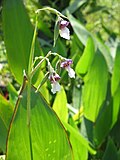 Thalia geniculata
