Haute cuisine: Difference between revisions
CSV import Tags: mobile edit mobile web edit |
CSV import |
||
| Line 25: | Line 25: | ||
{{Cardiology-stub}} | {{Cardiology-stub}} | ||
{{Neurology-stub}} | {{Neurology-stub}} | ||
<gallery> | |||
File:Tournedos_Rossini_with_Truffle_Madeira_Sauce.jpg|Tournedos Rossini with Truffle Madeira Sauce | |||
File:Veal_cutlet_Marechale.jpg|Veal cutlet Marechale | |||
File:Pommes_Anna.jpg|Pommes Anna | |||
File:Cuisine_Trois_étoiles.jpg|Haute cuisine | |||
File:Jacques_Lameloise_DSCF6580.jpg|Haute cuisine | |||
</gallery> | |||
Latest revision as of 21:23, 20 February 2025
Hatchcock's sign is a clinical sign used in the diagnosis of certain medical conditions. It is named after the physician who first described it, Dr. John Hatchcock.
Definition[edit]
Hatchcock's sign is defined as a sudden increase in heart rate and blood pressure when a patient is moved from a lying to a standing position. This is due to a decrease in blood flow to the brain, which triggers the body's compensatory mechanisms to increase heart rate and blood pressure.
Clinical significance[edit]
Hatchcock's sign is used in the diagnosis of orthostatic hypotension, a condition characterized by a drop in blood pressure upon standing. It is also seen in patients with autonomic dysfunction, where the body's automatic functions, such as heart rate and blood pressure regulation, are impaired.
Method of assessment[edit]
To assess for Hatchcock's sign, the patient's heart rate and blood pressure are measured while lying down and then again after standing up. A significant increase in these parameters indicates a positive Hatchcock's sign.
Limitations[edit]
While Hatchcock's sign is a useful tool in the diagnosis of orthostatic hypotension and autonomic dysfunction, it is not specific to these conditions. Other conditions, such as dehydration and certain medications, can also cause a similar response.
See also[edit]


This article is a cardiovascular system stub. You can help WikiMD by expanding it!
-
 Tournedos Rossini with Truffle Madeira Sauce
 -
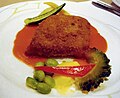 Veal cutlet Marechale
 -
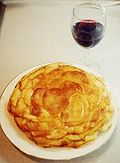 Pommes Anna
 -
 Haute cuisine
 -
 Haute cuisine


