Neoliberalism: Difference between revisions
CSV import Tags: mobile edit mobile web edit |
CSV import |
||
| Line 30: | Line 30: | ||
{{Economics-stub}} | {{Economics-stub}} | ||
{{Politics-stub}} | {{Politics-stub}} | ||
<gallery> | |||
File:US_federal_minimum_wage_if_it_had_kept_pace_with_productivity._Also,_the_inflation-adjusted_minimum_wage.png|Neoliberalism | |||
File:Graph_charting_income_per_capita_throughout_the_Great_Depression.svg|Neoliberalism | |||
File:Friedrich_Hayek_portrait.jpg|Friedrich Hayek | |||
File:Bundesarchiv_B_145_Bild-F015320-0010,_Ludwig_Erhard.jpg|Ludwig Erhard | |||
File:Marshallplanhilfe.gif|Marshall Plan | |||
File:Economic_growth_of_Chile.PNG|Economic growth of Chile | |||
File:Panfleto_Tercera_Jornada_Protesta_Nacional.jpg|Neoliberalism | |||
File:Unemployment_Chile.png|Unemployment in Chile | |||
File:GDP_per_capita_LA-Chile-2.png|GDP per capita in Latin America - Chile | |||
File:President_Bush,_Canadian_Prime_Minister_Brian_Mulroney_and_Mexican_President_Carlos_Salinas_participate_in_the..._-_NARA_-_186460.jpg|Neoliberalism | |||
File:Noam_Chomsky_portrait_2015.jpg|Noam Chomsky | |||
File:Total_US_family_wealth_timeline_by_wealth_group.png|Neoliberalism | |||
</gallery> | |||
Latest revision as of 12:01, 18 February 2025
Neoliberalism is a political philosophy and economic theory that advocates for the increased role of the private sector in the economy and society. It is characterized by free market policies, deregulation, privatization, and a reduction in government spending.
History[edit]
The term "neoliberalism" was first used in the 1930s by Alexander Rüstow, a German economist and sociologist, during the Colloque Walter Lippmann. The term was later popularized in the 1970s and 1980s by economists such as Milton Friedman and Friedrich Hayek, who advocated for a return to classical liberalism.
Principles[edit]
Neoliberalism is based on the principles of individualism, free trade, and competition. It argues that governments should limit their intervention in the economy, and instead, allow the market forces to determine the distribution of resources. This is believed to lead to greater efficiency, innovation, and economic growth.
Criticism[edit]
Critics of neoliberalism argue that it leads to income inequality, social exclusion, and environmental degradation. They also argue that it undermines democracy by shifting power from the public to the private sector.
Impact[edit]
Neoliberal policies have been implemented in various countries around the world, including the United States, the United Kingdom, and Chile. These policies have had significant impacts on the economy, society, and politics of these countries.
See also[edit]
This article is a economics-related stub. You can help WikiMD by expanding it!
This article is a stub. You can help WikiMD by expanding it!
-
 Neoliberalism
 -
 Neoliberalism
 -
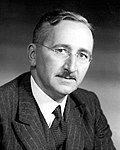 Friedrich Hayek
 -
 Ludwig Erhard
 -
 Marshall Plan
 -
 Economic growth of Chile
 -
 Neoliberalism
 -
 Unemployment in Chile
 -
 GDP per capita in Latin America - Chile
 -
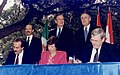 Neoliberalism
 -
 Noam Chomsky
 -
 Neoliberalism


