Wilhelm Wundt: Difference between revisions
CSV import Tags: mobile edit mobile web edit |
CSV import |
||
| Line 33: | Line 33: | ||
[[Category:History of psychology]] | [[Category:History of psychology]] | ||
{{Psychology-stub}} | {{Psychology-stub}} | ||
<gallery> | |||
File:Wilhelm_Wundt.jpg|Wilhelm Wundt | |||
File:Wundt-research-group.jpg|Wundt Research Group | |||
File:Wilhelm_Wundt_Gravestone.jpg|Wilhelm Wundt Gravestone | |||
File:Wundt_illusion.svg|Wundt Illusion | |||
File:Apperzeptionszentrum_(Wundt,_Grundzüge,_1903,_5th_ed._Vol._1,_p._324).jpg|Apperzeptionszentrum (Wundt, Grundzüge, 1903, 5th ed. Vol. 1, p. 324) | |||
File:Portraitbüste_0686-90_F22838.jpg|Portrait Bust of Wilhelm Wundt | |||
File:Wundt-Plakette_Leipzig.tif|Wundt Plaque in Leipzig | |||
File:Wilhelm_Wundt,_Statue,_Southwest_University_Chongqing,_China.jpg|Wilhelm Wundt Statue, Southwest University Chongqing, China | |||
</gallery> | |||
Latest revision as of 11:50, 18 February 2025
Wilhelm Wundt (1832–1920) was a German physiologist, philosopher, and psychologist, who is widely regarded as one of the pioneers of modern psychology. He is best known for establishing the first psychology laboratory in the world at the University of Leipzig in 1879, marking the formal start of psychology as an independent field of study.
Early Life and Education[edit]
Wilhelm Wundt was born on August 16, 1832, in the small town of Neckarau in Baden-Württemberg, Germany. He studied at the University of Tübingen, the University of Heidelberg, and the University of Berlin.
Career[edit]
In 1875, Wundt was appointed as a professor at the University of Leipzig. It was here that he established the first psychology laboratory in 1879, marking the formal separation of psychology from philosophy and the birth of psychology as a unique field of study.
Wundt's work at Leipzig led to the development of experimental psychology, which uses scientific methods to study the human mind and behavior. He is also known for his work on introspection, a method of self-observation used in psychology.
Contributions to Psychology[edit]
Wundt's most significant contribution to psychology was his establishment of the first psychology laboratory, which allowed for the scientific study of the human mind and behavior. He also developed the theory of structuralism, which sought to understand the mind by identifying its basic components.
In addition to his work in experimental psychology, Wundt also made significant contributions to the field of social psychology. He proposed that cultural factors play a crucial role in shaping human behavior, a theory that has had a lasting impact on the field.
Later Life and Legacy[edit]
Wundt continued to teach and conduct research at the University of Leipzig until his retirement in 1917. He died on August 31, 1920, in Grossbothen, Germany.
Today, Wundt is remembered as one of the founding figures of modern psychology. His work has had a profound influence on the field, shaping its development and contributing to its recognition as a distinct scientific discipline.
See Also[edit]
References[edit]
<references />

This article is a psychology-related stub. You can help WikiMD by expanding it!
-
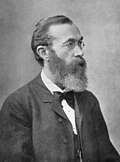 Wilhelm Wundt
 -
 Wundt Research Group
 -
 Wilhelm Wundt Gravestone
 -
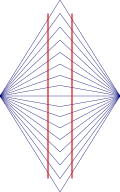 Wundt Illusion
 -
 Apperzeptionszentrum (Wundt, Grundzüge, 1903, 5th ed. Vol. 1, p. 324)
 -
 Portrait Bust of Wilhelm Wundt
 -
 Wundt Plaque in Leipzig
 -
 Wilhelm Wundt Statue, Southwest University Chongqing, China


.jpg)


