Soft-shell crab: Difference between revisions
CSV import |
CSV import Tags: mobile edit mobile web edit |
||
| Line 27: | Line 27: | ||
{{Crustacean-stub}} | {{Crustacean-stub}} | ||
{{food-stub}} | {{food-stub}} | ||
<gallery> | |||
File:Soft-shell_crab_on_ice.jpg|Soft-shell crab | |||
File:Softshell_crab_are-_in-season.jpg|Soft-shell crab | |||
File:Soft_shell_crab_(3196520484).jpg|Soft-shell crab | |||
File:St_Johns_Tavern,_Archway,_London_(6014211118).jpg|Soft-shell crab | |||
File:Ultimate_Seafood_Platter_at_Landry's_Seafood_House.jpg|Soft-shell crab | |||
File:Soft_shell_crab.jpg|Soft-shell crab | |||
File:Soft_Shelled_Crab_on_Noodle_Soup.jpg|Soft-shell crab | |||
File:Softshell_crab,_sweet_corn,_bacon,_buttermilk,_tomato_-_Coquette_New_Orleans.jpg|Soft-shell crab | |||
File:Soft_shell_crab_at_the_Pacific_Fair,_Gold_Coast,_Queensland.jpg|Soft-shell crab | |||
File:Soft_Shelled_Crab_on_Sushi_Rice_-_Arintji_(69449046).jpg|Soft-shell crab | |||
File:Spider_hand_roll.jpg|Soft-shell crab | |||
</gallery> | |||
Latest revision as of 12:01, 18 February 2025
Soft-shell crab is a culinary term for crabs that have recently molted their old exoskeleton and are still soft. This means that almost the entire animal can be eaten, rather than having to shell the animal to reach the meat. The exceptions are the mouthparts, the gills and the abdomen, which must be discarded. The remaining, edible part of the crab is typically deep fried or sautéed.
Biology[edit]
Crabs, like many other crustaceans, grow in size by shedding their old exoskeleton in a process called moulting. After the old shell has been shed, the crab is left with a soft, flexible exoskeleton which takes a few days to harden. During this period, the crabs are vulnerable to predators, which is why they tend to remain buried in the sand or mud until their new shell has hardened.
Culinary use[edit]
Soft-shell crabs are usually harvested immediately after moulting, while the new shell is still soft. They are typically cooked and eaten whole, with the shell, after minimal cleaning. The most common methods of cooking soft-shell crabs are deep frying, grilling, and sautéing. They are often served in sandwiches or as part of a seafood platter.
In the United States, the blue crab (Callinectes sapidus) is the most common species used for soft-shell crabs, particularly in the Chesapeake Bay region. In Asia, particularly in Japan and Thailand, other species of crabs are also used.
Harvesting and availability[edit]
Soft-shell crabs are typically harvested in the wild from the ocean or bay environments. They are caught just after they moult, when their new shell is still soft. This requires careful monitoring of crab populations and individual crabs to determine the right time to harvest.
In the United States, soft-shell crabs are typically available from April to September, with the peak season being in May and June. In Asia, the availability of soft-shell crabs can vary depending on the species and the region.
See also[edit]
.png)
This article is a crustacean-related stub. You can help WikiMD by expanding it!

-
 Soft-shell crab
 -
 Soft-shell crab
 -
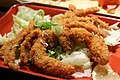 Soft-shell crab
 -
 Soft-shell crab
 -
 Soft-shell crab
 -
 Soft-shell crab
 -
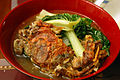 Soft-shell crab
 -
 Soft-shell crab
 -
 Soft-shell crab
 -
 Soft-shell crab
 -
 Soft-shell crab


.jpg)
.jpg)


.jpg)

