Species complex: Difference between revisions
CSV import |
CSV import Tags: mobile edit mobile web edit |
||
| Line 27: | Line 27: | ||
[[Category:Species]] | [[Category:Species]] | ||
{{biology-stub}} | {{biology-stub}} | ||
<gallery> | |||
File:Heliconius_mimicry.png|Species_complex | |||
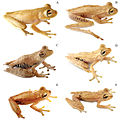
File:Systematics-of-treefrogs-of-the-Hypsiboas-calcaratus-and-Hypsiboas-fasciatus-species-complex-(Anura-ZooKeys-370-001-g009.jpg|Species_complex | |||
File:Kärpässienet.jpg|Species_complex | |||
File:Loxodontacyclotis.jpg|Species_complex | |||
File:Latest_Tank_setup_135172687.jpg|Species_complex | |||
File:Sparganium_eurycarpum-Hetaerina_americana-male_perching.jpg|Species_complex | |||
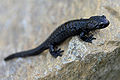
File:Salamandra_atra-01-Kaernten-2008-Thomas_Huntke.jpg|Species_complex | |||
File:Salamandra_corsica.jpg|Species_complex | |||
File:Salamandra_salamandra_(Marek_Szczepanek).jpg|Species_complex | |||
File:Phylogeny_species_complex.svg|Species_complex | |||
File:Cryptic_speciation.svg|Species_complex | |||
File:AnophelesGambiaemosquito.jpg|Species_complex | |||
</gallery> | |||
Latest revision as of 12:14, 18 February 2025
Species complex is a term in biology and systematics that refers to a group of closely related species that are so similar in appearance that the boundaries between them are often unclear. Terms sometimes used synonymously but with more precise meanings are: cryptic species for two or more species hidden under one species name, sibling species for two cryptic species that are each other's closest relative, and species flock for a group of closely related species living in the same habitat. As a result, defining a species complex is a challenging task for taxonomists and biologists.
Definition and Identification[edit]
A species complex is typically defined as a group of two or more distinct species that are so closely related in their physical characteristics that they can be difficult to distinguish from one another. This can occur as a result of convergent evolution, where different species evolve similar traits due to similar environments or ecological niches, or through reticulate evolution, where species interbreed to produce hybrid species.
Identifying species within a complex can be challenging. Traditional methods, such as morphology-based identification, can be insufficient due to the high degree of physical similarity between species. Modern techniques, such as DNA sequencing and genetic analysis, can provide more accurate identification.
Examples[edit]
Examples of species complexes include the Anopheles gambiae complex, which includes several species of mosquitoes that transmit malaria, and the Drosophila melanogaster complex, which includes several species of fruit flies used in genetic research. Other examples include the Herring Gull complex in birds and the Ensatina salamander complex.
Implications for Conservation[edit]
Understanding and identifying species complexes is important for conservation biology. If a species complex is incorrectly identified as a single species, it may be that some of the actual species within the complex are at greater risk of extinction than is recognized. This can lead to inadequate conservation measures.
See Also[edit]
References[edit]
<references />

-
 Species_complex
 -
 Species_complex
 -
 Species_complex
 -
 Species_complex
 -
 Species_complex
 -
 Species_complex
 -
 Species_complex
 -
 Species_complex
 -
 Species_complex
 -
 Species_complex
 -
 Species_complex
 -
 Species_complex


.jpg)


