Cephalopod ink: Difference between revisions
CSV import Tags: mobile edit mobile web edit |
CSV import |
||
| Line 25: | Line 25: | ||
{{Ink}} | {{Ink}} | ||
{{food-stub}} | {{food-stub}} | ||
<gallery> | |||
File:Chtenopteryx_sicula2.jpg|Cephalopod_ink | |||
File:Arrosnegre.png|Cephalopod_ink | |||
File:Black_pasta_with_truffle_and_pistachio.jpg|Cephalopod_ink | |||
File:Squid_ink.jpg|Cephalopod_ink | |||
File:Making_squid_ink_pasta.jpg|Cephalopod_ink | |||
File:Making_squid_ink_pasta_-_16861551136.jpg|Cephalopod_ink | |||
File:Making_squid_ink_pasta_-_16887462295.jpg|Cephalopod_ink | |||
File:Making_squid_ink_pasta_-_16701315869.jpg|Cephalopod_ink | |||
File:Homemade_squid_ink_pasta.jpg|Cephalopod_ink | |||
File:Squid_ink_pasta_dish.jpg|Cephalopod_ink | |||
</gallery> | |||
Latest revision as of 11:58, 18 February 2025
Cephalopod ink is a dark pigment released into water by most species of cephalopod, usually as an escape mechanism. All cephalopods, with the exception of the Nautilidae family, are known to produce ink.
Composition[edit]
Cephalopod ink contains a number of substances, including melanin (which gives the ink its dark color), mucus, and the neurotransmitter dopamine. The exact composition can vary between species, but it is predominantly made up of melanin.
Use in defense[edit]
When a cephalopod releases its ink, it forms a cloud that obscures the cephalopod's outline. This can confuse or deter potential predators, giving the cephalopod a chance to escape. Some species of cephalopod can also shape the ink cloud into a pseudo-morph, or false body, which can further distract predators.
Other uses[edit]
In addition to its use in defense, cephalopod ink has been used by humans for various purposes. It was used as a dye and writing ink in ancient times, and is still used in some cultures today. It is also used in cooking, particularly in Mediterranean and Japanese cuisine, where it is used to color and flavor dishes such as squid ink pasta and squid ink sushi.
Health effects[edit]
While generally considered safe for consumption, there have been some concerns raised about the potential health effects of consuming cephalopod ink, particularly in relation to its dopamine content. However, further research is needed to fully understand these potential risks.
See also[edit]
| Cephalopods | ||||||||||
|---|---|---|---|---|---|---|---|---|---|---|
This cephalopod-related article is a stub. You can help WikiMD by expanding it.
|
| Ink | ||||||||||
|---|---|---|---|---|---|---|---|---|---|---|
|

-
 Cephalopod_ink
 -
 Cephalopod_ink
 -
 Cephalopod_ink
 -
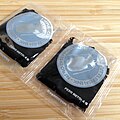 Cephalopod_ink
 -
 Cephalopod_ink
 -
 Cephalopod_ink
 -
 Cephalopod_ink
 -
 Cephalopod_ink
 -
 Cephalopod_ink
 -
 Cephalopod_ink


