Tula pryanik: Difference between revisions
CSV import Tags: mobile edit mobile web edit |
CSV import |
||
| (One intermediate revision by the same user not shown) | |||
| Line 1: | Line 1: | ||
'''Tula pryanik''' is a type of | {{short description|Traditional Russian gingerbread from Tula}} | ||
{{Use dmy dates|date=October 2023}} | |||
[[File:Tula_gingerbread.jpg|Decorative Tula gingerbread|thumb]] | |||
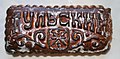
'''Tula pryanik''' is a type of traditional Russian gingerbread originating from the city of [[Tula]], known for its distinctive taste and decorative designs. It is a popular treat in Russia and is often associated with the city of Tula. | |||
==History== | ==History== | ||
The history of Tula pryanik dates back to the 17th century. The city of Tula | The history of Tula pryanik dates back to the 17th century. The city of Tula became renowned for its pryaniki due to the high quality of local honey and the skill of its bakers. Over time, Tula pryanik became a symbol of the city and a popular souvenir for visitors. | ||
==Production== | ==Production== | ||
Tula pryanik is made from a dough that includes flour, honey, and spices such as cinnamon and cardamom. The dough is rolled out and pressed into wooden molds to create intricate designs, often featuring floral patterns or inscriptions. After baking, the pryanik is sometimes filled with jam or condensed milk. | |||
==Cultural | ==Cultural significance== | ||
Tula pryanik | Tula pryanik is not only a culinary delight but also a cultural symbol. It is often given as a gift and is a staple at Russian festivals and celebrations. The pryanik's unique design and taste make it a cherished part of Russian heritage. | ||
== | ==Monuments and recognition== | ||
In Tula, there is a monument dedicated to the Tula pryanik, highlighting its importance to the city's identity. The monument is a popular attraction for tourists and locals alike. | |||
==Related pages== | |||
* [[Gingerbread]] | |||
* [[Russian cuisine]] | * [[Russian cuisine]] | ||
* [[ | * [[Tula]] | ||
[[Category:Russian cuisine]] | [[Category:Russian cuisine]] | ||
[[Category:Gingerbread]] | [[Category:Gingerbread]] | ||
[[Category: | [[Category:Tula]] | ||
<gallery> | |||
File:Tula_gingerbread.jpg|Tula gingerbread | |||
</gallery> | |||
Latest revision as of 02:08, 18 February 2025
Traditional Russian gingerbread from Tula

Tula pryanik is a type of traditional Russian gingerbread originating from the city of Tula, known for its distinctive taste and decorative designs. It is a popular treat in Russia and is often associated with the city of Tula.
History[edit]
The history of Tula pryanik dates back to the 17th century. The city of Tula became renowned for its pryaniki due to the high quality of local honey and the skill of its bakers. Over time, Tula pryanik became a symbol of the city and a popular souvenir for visitors.
Production[edit]
Tula pryanik is made from a dough that includes flour, honey, and spices such as cinnamon and cardamom. The dough is rolled out and pressed into wooden molds to create intricate designs, often featuring floral patterns or inscriptions. After baking, the pryanik is sometimes filled with jam or condensed milk.
Cultural significance[edit]
Tula pryanik is not only a culinary delight but also a cultural symbol. It is often given as a gift and is a staple at Russian festivals and celebrations. The pryanik's unique design and taste make it a cherished part of Russian heritage.
Monuments and recognition[edit]
In Tula, there is a monument dedicated to the Tula pryanik, highlighting its importance to the city's identity. The monument is a popular attraction for tourists and locals alike.
Related pages[edit]
-
 Tula gingerbread
