List of sheep milk cheeses: Difference between revisions
CSV import |
CSV import |
||
| Line 33: | Line 33: | ||
[[Category:Lists of foods]] | [[Category:Lists of foods]] | ||
{{incomplete food list}} | {{incomplete food list}} | ||
== List of sheep milk cheeses gallery == | |||
<gallery> | |||
File:Casu Marzu cheese.jpg|Casu Marzu cheese | |||
File:Etorki.jpg|Etorki | |||
File:Feta Greece 2.jpg|Feta Greece | |||
File:Ossau-Iraty.jpg|Ossau-Iraty | |||
File:20140507 Paški sir cheese from Pag.jpg|Paški sir cheese from Pag | |||
File:Pecorino romano on board cropped.PNG|Pecorino Romano | |||
File:Telemea.jpg|Telemea | |||
File:Torta del Casar.jpg|Torta del Casar | |||
File:Safed cheese.jpg|Safed cheese | |||
File:Zamorano Jon Sullivan.jpg|Zamorano | |||
</gallery> | |||
Latest revision as of 05:36, 3 March 2025
Sheep milk cheese is a type of cheese made from sheep milk. This type of cheese is popular in many parts of the world, including Europe, the Middle East, and North Africa. Sheep milk cheese is known for its rich and creamy texture, as well as its high nutritional value.
Types of Sheep Milk Cheese[edit]
There are many different types of sheep milk cheese, each with its own unique flavor and texture. Some of the most popular types include:
- Roquefort: This is a blue cheese from France that is known for its strong flavor and crumbly texture. It is one of the oldest known types of cheese, with a history dating back to ancient times.
- Manchego: This is a Spanish cheese that is made in the La Mancha region. It has a firm texture and a slightly salty flavor.
- Feta: This is a Greek cheese that is known for its tangy flavor and crumbly texture. It is often used in salads and other Mediterranean dishes.
- Pecorino Romano: This is an Italian cheese that is known for its salty flavor and hard texture. It is often used in pasta dishes.
- Ricotta: This is a soft, creamy cheese that is often used in Italian desserts. It is made by reheating the whey left over from the production of other cheeses.
Production of Sheep Milk Cheese[edit]
The production of sheep milk cheese involves several steps. First, the milk is collected from the sheep and then pasteurized to kill any harmful bacteria. Next, a starter culture is added to the milk to begin the fermentation process. The milk is then curdled using rennet, and the curds are cut and heated to separate the whey. The curds are then pressed into molds and aged for a specific period of time, depending on the type of cheese being made.
Nutritional Value[edit]
Sheep milk cheese is high in protein, calcium, and vitamins A and B. It is also lower in lactose than cow's milk cheese, making it a good option for those who are lactose intolerant.
See Also[edit]
This is a non-exhaustive food and drink related list.

List of sheep milk cheeses gallery[edit]
-
 Casu Marzu cheese
 -
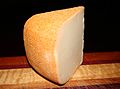 Etorki
 -
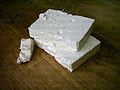 Feta Greece
 -
 Ossau-Iraty
 -
 Paški sir cheese from Pag
 -
 Pecorino Romano
 -
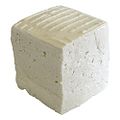 Telemea
 -
 Torta del Casar
 -
 Safed cheese
 -
 Zamorano


