Used coffee grounds: Difference between revisions
CSV import Tags: mobile edit mobile web edit |
CSV import |
||
| (One intermediate revision by the same user not shown) | |||
| Line 1: | Line 1: | ||
== Used Coffee Grounds == | |||
[[File:Ground_coffee_in_boxes.jpg|thumb|Ground coffee ready for use]] | |||
'''Used coffee grounds''' are the remnants of brewed coffee, often considered waste but increasingly recognized for their potential in various applications. These grounds are rich in nitrogen and can be utilized in gardening, composting, and even as a substrate for growing mushrooms. | |||
== Composition == | |||
Used coffee grounds are primarily composed of organic material, including cellulose, hemicellulose, and lignin. They also contain nitrogen, phosphorus, potassium, and other trace minerals, making them beneficial for soil enrichment. The grounds have a slightly acidic pH, which can be advantageous for certain plants. | |||
== Uses == | == Uses == | ||
=== Gardening === | === Gardening === | ||
Used coffee grounds can be used as a natural fertilizer in gardens. They improve soil structure, enhance drainage, and increase water retention. The nitrogen content in the grounds helps in the growth of plants, particularly those that thrive in acidic environments, such as [[blueberries]] and [[azaleas]]. | |||
Used coffee grounds can be used as a natural | |||
=== | === Composting === | ||
Used coffee grounds can | |||
[[File:Worms-from-coffee-compost-pile.jpg|thumb|Worms thriving in a coffee compost pile]] | |||
Coffee grounds are an excellent addition to compost piles. They are considered a "green" compost material, providing nitrogen to the composting process. When mixed with "brown" materials like dried leaves or straw, they help create a balanced compost that can enrich garden soil. | |||
=== Mushroom Cultivation === | |||
[[File:Oyster_mushroom_(Pleurotus_ostreatus)_mycelium_on_coffee_grounds.JPG|thumb|Oyster mushroom mycelium growing on coffee grounds]] | |||
Used coffee grounds can serve as a substrate for growing mushrooms, particularly [[oyster mushrooms]] (''Pleurotus ostreatus''). The grounds provide a nutrient-rich environment for the mycelium to thrive, making it a sustainable option for mushroom cultivation. | |||
== Environmental Impact == | == Environmental Impact == | ||
== | Recycling used coffee grounds helps reduce waste and can lower the carbon footprint associated with coffee consumption. By diverting grounds from landfills, where they would decompose and release methane, their use in gardening and composting contributes to environmental sustainability. | ||
== Related Pages == | |||
* [[Coffee]] | * [[Coffee]] | ||
* [[Composting]] | * [[Composting]] | ||
* [[ | * [[Mushroom cultivation]] | ||
[[Category:Coffee]] | [[Category:Coffee]] | ||
[[Category:Recycling]] | |||
[[Category:Gardening]] | [[Category:Gardening]] | ||
<gallery> | |||
File:Ground_coffee_in_boxes.jpg|Used coffee grounds in boxes | |||
File:Worms-from-coffee-compost-pile.jpg|Worms from coffee compost pile | |||
File:Oyster_mushroom_(Pleurotus_ostreatus)_mycelium_on_coffee_grounds.JPG|Oyster mushroom mycelium on coffee grounds | |||
</gallery> | |||
Latest revision as of 04:17, 18 February 2025
Used Coffee Grounds[edit]

Used coffee grounds are the remnants of brewed coffee, often considered waste but increasingly recognized for their potential in various applications. These grounds are rich in nitrogen and can be utilized in gardening, composting, and even as a substrate for growing mushrooms.
Composition[edit]
Used coffee grounds are primarily composed of organic material, including cellulose, hemicellulose, and lignin. They also contain nitrogen, phosphorus, potassium, and other trace minerals, making them beneficial for soil enrichment. The grounds have a slightly acidic pH, which can be advantageous for certain plants.
Uses[edit]
Gardening[edit]
Used coffee grounds can be used as a natural fertilizer in gardens. They improve soil structure, enhance drainage, and increase water retention. The nitrogen content in the grounds helps in the growth of plants, particularly those that thrive in acidic environments, such as blueberries and azaleas.
Composting[edit]

Coffee grounds are an excellent addition to compost piles. They are considered a "green" compost material, providing nitrogen to the composting process. When mixed with "brown" materials like dried leaves or straw, they help create a balanced compost that can enrich garden soil.
Mushroom Cultivation[edit]
_mycelium_on_coffee_grounds.JPG)
Used coffee grounds can serve as a substrate for growing mushrooms, particularly oyster mushrooms (Pleurotus ostreatus). The grounds provide a nutrient-rich environment for the mycelium to thrive, making it a sustainable option for mushroom cultivation.
Environmental Impact[edit]
Recycling used coffee grounds helps reduce waste and can lower the carbon footprint associated with coffee consumption. By diverting grounds from landfills, where they would decompose and release methane, their use in gardening and composting contributes to environmental sustainability.
Related Pages[edit]
-
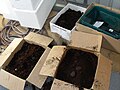 Used coffee grounds in boxes
 -
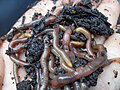 Worms from coffee compost pile
 -
 Oyster mushroom mycelium on coffee grounds
