Rhynchophorus: Difference between revisions
CSV import Tags: mobile edit mobile web edit |
CSV import |
||
| Line 32: | Line 32: | ||
{{Beetles-stub}} | {{Beetles-stub}} | ||
{{food-stub}} | {{food-stub}} | ||
<gallery> | |||
File:ചെമ്പൻചെല്ലി.JPG|ചെമ്പൻചെല്ലി | |||
File:Dryophthoridae - Rhynchophorus bilineatus.JPG|Rhynchophorus bilineatus | |||
File:Solid Black Palmetto Weevil (Rhynchophorus cruentatus Fabricius)Top.JPG|Solid Black Palmetto Weevil (Rhynchophorus cruentatus Fabricius) | |||
File:Red Palm Weevil, Rhynchophorus ferrugineus - Flickr - gailhampshire (1).jpg|Red Palm Weevil, Rhynchophorus ferrugineus | |||
File:RhynchoDSC9579.jpg|RhynchoDSC9579 | |||
File:Curculionidae - Rhynchophorus phoenicis.jpg|Rhynchophorus phoenicis | |||
File:Rhynchophorus vulneratus imported from iNaturalist photo 56333448 on 10 November 2020.jpg|Rhynchophorus vulneratus | |||
</gallery> | |||
Latest revision as of 06:08, 3 March 2025
Rhynchophorus is a genus of beetles in the family Curculionidae, commonly known as the palm weevils. They are known for their elongated snouts and are considered significant pests in palm plantations, including coconut, date palm and oil palm.
Description[edit]
Species in the genus Rhynchophorus are large beetles, often measuring up to 5 cm in length. They are characterized by their elongated snouts, or rostrums, which they use to bore into palm trees. The body color varies among species, ranging from black to red or yellow.
Distribution and habitat[edit]
Rhynchophorus species are found worldwide, with a particular concentration in tropical and subtropical regions. They inhabit various types of palm plantations, where they cause significant damage.
Life cycle[edit]
The life cycle of Rhynchophorus species involves four stages: egg, larva, pupa, and adult. The female lays her eggs in the tissues of palm trees, where the larvae feed and develop. The pupal stage occurs within the tree, and the emerging adults then leave to find mates and new host trees.
Economic impact[edit]
Rhynchophorus weevils are considered major pests in palm plantations. They cause significant economic losses by damaging the trees and reducing their productivity. The most notorious species is the red palm weevil, which is considered the most destructive pest of palms in the world.
Control[edit]
Control of Rhynchophorus weevils involves a combination of methods, including monitoring, use of pesticides, and biological control. Early detection is crucial to prevent infestations and limit damage.
See also[edit]


-
 ചെമ്പൻചെല്ലി
 -
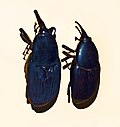 Rhynchophorus bilineatus
 -
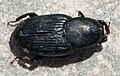 Solid Black Palmetto Weevil (Rhynchophorus cruentatus Fabricius)
 -
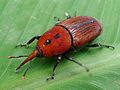 Red Palm Weevil, Rhynchophorus ferrugineus
 -
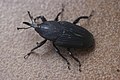 RhynchoDSC9579
 -
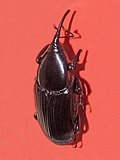 Rhynchophorus phoenicis
 -
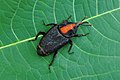 Rhynchophorus vulneratus


Top.JPG)
.jpg)


