Salt well: Difference between revisions
CSV import Tags: mobile edit mobile web edit |
CSV import |
||
| Line 23: | Line 23: | ||
{{Mining-stub}} | {{Mining-stub}} | ||
{{food-stub}} | {{food-stub}} | ||
== Salt_well == | |||
<gallery> | |||
File:Brine_Wells_near_Preesall_-_geograph.org.uk_-_109704.jpg|Brine Wells near Preesall | |||
File:Brine_Well_Head_-_geograph.org.uk_-_109708.jpg|Brine Well Head | |||
</gallery> | |||
Latest revision as of 00:52, 27 February 2025
Salt well is a type of well created by drilling a hole in the ground to extract salt from the earth. Salt wells have been used for centuries as a method of obtaining salt, which is essential for many aspects of human life, including food preservation and seasoning.
History[edit]
The history of salt wells dates back to ancient times. The Ancient Romans were known to have used salt wells, and in China, salt well drilling techniques were developed as early as the 2nd century BC. In the United States, the first salt well was drilled in 1806 in Kanawha County, West Virginia.
Operation[edit]
A salt well operates by injecting water into the ground, which dissolves the salt deposits. The resulting brine is then pumped back to the surface, where the water is evaporated, leaving behind the salt. This process is known as solution mining.
Locations[edit]
Salt wells can be found in many parts of the world. Some of the most notable salt well locations include the Sichuan Basin in China, the Khewra Salt Mine in Pakistan, and the Wieliczka Salt Mine in Poland.
Environmental Impact[edit]
While salt wells provide a valuable resource, they can also have a significant environmental impact. The extraction process can lead to soil erosion, water contamination, and habitat destruction. In addition, the disposal of waste brine can harm aquatic ecosystems.
See Also[edit]


Salt_well[edit]
-
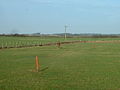 Brine Wells near Preesall
 -
 Brine Well Head


