Oriental melon: Difference between revisions
CSV import |
No edit summary |
||
| (2 intermediate revisions by the same user not shown) | |||
| Line 1: | Line 1: | ||
'''Oriental | {{Short description|A detailed overview of the Oriental melon}} | ||
The '''Oriental melon''' (''Cucumis melo'' var. ''makuwa'') is a type of melon that is widely cultivated in East Asia, particularly in countries such as China, Korea, and Japan. Known for its sweet flavor and crisp texture, the Oriental melon is a popular fruit that is often consumed fresh or used in various culinary dishes. | |||
== Description == | ==Description== | ||
The Oriental melon is a small, | The Oriental melon is a small to medium-sized fruit, typically weighing between 300 to 500 grams. It has a smooth, thin rind that is usually yellow with white stripes running longitudinally. The flesh of the melon is white, juicy, and sweet, with a texture that is both crisp and tender. The seeds are located in the central cavity and are usually discarded before consumption. | ||
== Cultivation == | ==Cultivation== | ||
Oriental melons | Oriental melons are grown in warm climates and require well-drained soil with plenty of sunlight. They are typically planted in the spring and harvested in the summer. The plants are vine-like and require support as they grow. Farmers often use trellises to keep the fruits off the ground, which helps prevent rot and disease. | ||
== | ==Nutritional Value== | ||
Oriental melons are | Oriental melons are low in calories and rich in vitamins and minerals. They are an excellent source of vitamin C, which is important for immune function and skin health. The fruit also contains dietary fiber, which aids in digestion, and small amounts of vitamin A, potassium, and folate. | ||
== | ==Culinary Uses== | ||
Oriental melons are | In East Asian cuisine, Oriental melons are often eaten fresh as a snack or dessert. They can also be used in salads, smoothies, and fruit platters. In Korea, the melon is known as "chamoe" and is a popular summer fruit. It is sometimes pickled or used in traditional dishes. | ||
== | ==Cultural Significance== | ||
* [[ | The Oriental melon holds cultural significance in several East Asian countries. In Korea, it is associated with summer and is often given as a gift during the hot months. The fruit is celebrated in festivals and is a symbol of good fortune and prosperity. | ||
* [[ | |||
* [[ | == Gallery == | ||
* [[ | <gallery> | ||
File:Korean_melon1.jpg|Oriental melon | |||
File:Chamoe-jangajji.jpg|Oriental melon | |||
File:Growing_Korean_melons_1_Seeds.jpg|Oriental melon | |||
File:Growing_Korean_melons_4_Seedlings.jpg|Oriental melon | |||
File:Growing_Korean_melons_5_Young_plants.jpg|Oriental melon | |||
File:Cucumis_melo_var._makuwa_01.jpg|Oriental melon | |||
</gallery> | |||
==Related pages== | |||
* [[Melon]] | |||
* [[Cucumis melo]] | |||
* [[Korean cuisine]] | |||
* [[Japanese cuisine]] | |||
[[Category:Melons]] | [[Category:Melons]] | ||
[[Category: | [[Category:Asian cuisine]] | ||
[[Category:Fruit]] | |||
Latest revision as of 21:04, 21 February 2025
A detailed overview of the Oriental melon
The Oriental melon (Cucumis melo var. makuwa) is a type of melon that is widely cultivated in East Asia, particularly in countries such as China, Korea, and Japan. Known for its sweet flavor and crisp texture, the Oriental melon is a popular fruit that is often consumed fresh or used in various culinary dishes.
Description[edit]
The Oriental melon is a small to medium-sized fruit, typically weighing between 300 to 500 grams. It has a smooth, thin rind that is usually yellow with white stripes running longitudinally. The flesh of the melon is white, juicy, and sweet, with a texture that is both crisp and tender. The seeds are located in the central cavity and are usually discarded before consumption.
Cultivation[edit]
Oriental melons are grown in warm climates and require well-drained soil with plenty of sunlight. They are typically planted in the spring and harvested in the summer. The plants are vine-like and require support as they grow. Farmers often use trellises to keep the fruits off the ground, which helps prevent rot and disease.
Nutritional Value[edit]
Oriental melons are low in calories and rich in vitamins and minerals. They are an excellent source of vitamin C, which is important for immune function and skin health. The fruit also contains dietary fiber, which aids in digestion, and small amounts of vitamin A, potassium, and folate.
Culinary Uses[edit]
In East Asian cuisine, Oriental melons are often eaten fresh as a snack or dessert. They can also be used in salads, smoothies, and fruit platters. In Korea, the melon is known as "chamoe" and is a popular summer fruit. It is sometimes pickled or used in traditional dishes.
Cultural Significance[edit]
The Oriental melon holds cultural significance in several East Asian countries. In Korea, it is associated with summer and is often given as a gift during the hot months. The fruit is celebrated in festivals and is a symbol of good fortune and prosperity.
Gallery[edit]
-
 Oriental melon
 -
 Oriental melon
 -
 Oriental melon
 -
 Oriental melon
 -
 Oriental melon
 -
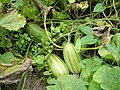 Oriental melon


