Linarang: Difference between revisions
CSV import |
CSV import |
||
| (2 intermediate revisions by the same user not shown) | |||
| Line 1: | Line 1: | ||
'''Linarang''' is a traditional | {{short description|A traditional Filipino dish from Cebu}} | ||
'''Linarang na Bakasi''' is a traditional Filipino dish originating from the [[Cebu]] region in the [[Philippines]]. It is a type of stew made primarily with [[eel]], locally known as "bakasi," and is renowned for its rich, savory flavor profile. This dish is a staple in Cebuano cuisine and is often enjoyed by locals and tourists alike. | |||
==Ingredients | ==Ingredients== | ||
The main ingredient | The main ingredient in Linarang na Bakasi is the [[bakasi]], or eel, which is abundant in the coastal waters of Cebu. Other essential ingredients include: | ||
The preparation of Linarang involves | * [[Tomato]]es | ||
* [[Onion]]s | |||
* [[Garlic]] | |||
* [[Ginger]] | |||
* [[Green chili]] peppers | |||
* [[Tamarind]] or [[kamias]] (for sourness) | |||
* [[Salt]] and [[pepper]] | |||
* [[Fish sauce]] | |||
* [[Coconut milk]] (optional) | |||
==Preparation== | |||
The preparation of Linarang na Bakasi involves several steps to ensure the flavors are well-developed: | |||
1. '''Cleaning the Eel''': The bakasi is thoroughly cleaned and cut into pieces. | |||
2. '''Sautéing''': Onions, garlic, and ginger are sautéed in a pot until fragrant. | |||
3. '''Simmering''': Tomatoes and green chili peppers are added, followed by the eel pieces. The mixture is simmered with tamarind or kamias to infuse the sour flavor. | |||
4. '''Seasoning''': Salt, pepper, and fish sauce are added to taste. Some variations include coconut milk for a creamier texture. | |||
5. '''Cooking''': The stew is cooked until the eel is tender and the flavors are well-blended. | |||
==Cultural Significance== | ==Cultural Significance== | ||
Linarang | Linarang na Bakasi holds a special place in Cebuano culture. It is often served during local festivals and gatherings, showcasing the region's rich culinary heritage. The dish is also a popular choice among visitors seeking an authentic taste of Cebu. | ||
== | ==Related pages== | ||
* [[ | * [[Cebuano cuisine]] | ||
* [[Philippine cuisine]] | |||
* [[Eel]] | |||
* [[Sinigang]] | * [[Sinigang]] | ||
[[Category: | [[Category:Philippine cuisine]] | ||
[[Category: | [[Category:Cebuano culture]] | ||
<gallery> | |||
File:Larang_na_bakasi_(Philippines).jpg|Linarang | |||
</gallery> | |||
Latest revision as of 21:33, 20 February 2025
A traditional Filipino dish from Cebu
Linarang na Bakasi is a traditional Filipino dish originating from the Cebu region in the Philippines. It is a type of stew made primarily with eel, locally known as "bakasi," and is renowned for its rich, savory flavor profile. This dish is a staple in Cebuano cuisine and is often enjoyed by locals and tourists alike.
Ingredients[edit]
The main ingredient in Linarang na Bakasi is the bakasi, or eel, which is abundant in the coastal waters of Cebu. Other essential ingredients include:
- Tomatoes
- Onions
- Garlic
- Ginger
- Green chili peppers
- Tamarind or kamias (for sourness)
- Salt and pepper
- Fish sauce
- Coconut milk (optional)
Preparation[edit]
The preparation of Linarang na Bakasi involves several steps to ensure the flavors are well-developed:
1. Cleaning the Eel: The bakasi is thoroughly cleaned and cut into pieces. 2. Sautéing: Onions, garlic, and ginger are sautéed in a pot until fragrant. 3. Simmering: Tomatoes and green chili peppers are added, followed by the eel pieces. The mixture is simmered with tamarind or kamias to infuse the sour flavor. 4. Seasoning: Salt, pepper, and fish sauce are added to taste. Some variations include coconut milk for a creamier texture. 5. Cooking: The stew is cooked until the eel is tender and the flavors are well-blended.
Cultural Significance[edit]
Linarang na Bakasi holds a special place in Cebuano culture. It is often served during local festivals and gatherings, showcasing the region's rich culinary heritage. The dish is also a popular choice among visitors seeking an authentic taste of Cebu.
Related pages[edit]
-
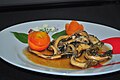 Linarang
.jpg)
