Botamochi: Difference between revisions
CSV import Tags: mobile edit mobile web edit |
CSV import |
||
| (One intermediate revision by the same user not shown) | |||
| Line 1: | Line 1: | ||
== Botamochi == | |||
[[File:Botamochi,Ohagi,Katori-city,Japan.JPG|thumb|right|Botamochi served in Katori City, Japan]] | |||
== Preparation == | '''Botamochi''' (____) is a traditional Japanese sweet made from [[sweet rice]] (glutinous rice) and [[red bean paste]]. It is a popular treat during the spring and autumn equinoxes, known as [[Higan]], and is often associated with [[Buddhist]] traditions. | ||
Botamochi is made | |||
== Ingredients and Preparation == | |||
Botamochi is primarily made from two main ingredients: [[glutinous rice]] and [[azuki beans]]. The rice is cooked until soft and sticky, then pounded or mashed slightly to form a cohesive mass. The azuki beans are cooked and sweetened to create a smooth or chunky [[red bean paste]], known as ''anko''. | |||
The preparation involves forming the rice into small, oval-shaped balls, which are then coated with the red bean paste. In some variations, the process is reversed, with the red bean paste forming the core and the rice on the outside. | |||
== Cultural Significance == | == Cultural Significance == | ||
Botamochi is | Botamochi is traditionally eaten during the [[spring equinox]] and is associated with the [[Buddhist]] practice of honoring ancestors. The name "botamochi" is derived from the [[botan]], or peony flower, which blooms in spring. During the autumn equinox, a similar sweet called [[ohagi]] is consumed, named after the [[hagi]], or bush clover, which blooms in autumn. | ||
== Variations == | |||
While the classic botamochi is coated with red bean paste, there are several regional and seasonal variations. Some versions are coated with [[kinako]] (roasted soybean flour) or [[sesame seeds]]. These variations offer different textures and flavors, catering to diverse palates. | |||
== Related Pages == | |||
* [[Ohagi]] | |||
* [[ | * [[Mochi]] | ||
* [[Anko]] | |||
* [[Japanese cuisine]] | * [[Japanese cuisine]] | ||
* [[ | * [[Higan]] | ||
[[Category:Japanese cuisine]] | [[Category:Japanese cuisine]] | ||
[[Category:Japanese desserts and sweets]] | [[Category:Japanese desserts and sweets]] | ||
<gallery> | |||
File:Ohagi_Botamochi.jpg|Botamochi | |||
File:Botamochi,Ohagi,Katori-city,Japan.JPG|Botamochi, Ohagi in Katori-city, Japan | |||
File:Naldebain_Eng_Pack.jpg|Naldebain English Pack | |||
</gallery> | |||
Latest revision as of 00:44, 18 February 2025
Botamochi[edit]

Botamochi (____) is a traditional Japanese sweet made from sweet rice (glutinous rice) and red bean paste. It is a popular treat during the spring and autumn equinoxes, known as Higan, and is often associated with Buddhist traditions.
Ingredients and Preparation[edit]
Botamochi is primarily made from two main ingredients: glutinous rice and azuki beans. The rice is cooked until soft and sticky, then pounded or mashed slightly to form a cohesive mass. The azuki beans are cooked and sweetened to create a smooth or chunky red bean paste, known as anko.
The preparation involves forming the rice into small, oval-shaped balls, which are then coated with the red bean paste. In some variations, the process is reversed, with the red bean paste forming the core and the rice on the outside.
Cultural Significance[edit]
Botamochi is traditionally eaten during the spring equinox and is associated with the Buddhist practice of honoring ancestors. The name "botamochi" is derived from the botan, or peony flower, which blooms in spring. During the autumn equinox, a similar sweet called ohagi is consumed, named after the hagi, or bush clover, which blooms in autumn.
Variations[edit]
While the classic botamochi is coated with red bean paste, there are several regional and seasonal variations. Some versions are coated with kinako (roasted soybean flour) or sesame seeds. These variations offer different textures and flavors, catering to diverse palates.
Related Pages[edit]
-
 Botamochi
 -
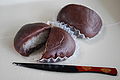 Botamochi, Ohagi in Katori-city, Japan
 -
 Naldebain English Pack


