Romanticism: Difference between revisions
CSV import |
CSV import |
||
| Line 39: | Line 39: | ||
{{stub}} | {{stub}} | ||
{{dictionary-stub1}} | {{dictionary-stub1}} | ||
<gallery> | |||
File:Caspar_David_Friedrich_032.jpg|Caspar David Friedrich | |||
File:Delacroix_-_La_Mort_de_Sardanapale_(1827).jpg|La Mort de Sardanapale by Delacroix | |||
File:Philipp_Otto_Runge_001.jpg|Philipp Otto Runge | |||
File:William_Blake_-_Songs_of_Innocence_and_of_Experience,_Plate_35,_"The_Little_Girl_Found"_(Bentley_36)_-_Google_Art_Project_(cropped).jpg|The Little Girl Found by William Blake | |||
File:John_William_Waterhouse_-_The_Lady_of_Shalott_-_Google_Art_Project.jpg|The Lady of Shalott by John William Waterhouse | |||
File:Chatterton.jpg|Chatterton | |||
File:Des_Knaben_Wunderhorn_III_(1808).jpg|Des Knaben Wunderhorn III | |||
File:Wordsworth_on_Helvellyn_by_Benjamin_Robert_Haydon.jpg|Wordsworth on Helvellyn by Benjamin Robert Haydon | |||
File:Byron_1813_by_Phillips.jpg|Byron 1813 by Phillips | |||
File:PG_1063Burns_Naysmith.jpg|Burns by Naysmith | |||
File:Sir_Henry_Raeburn_-_Portrait_of_Sir_Walter_Scott.jpg|Portrait of Sir Walter Scott by Sir Henry Raeburn | |||
File:Jean-Jacques_Grandville_-_Frenzied_Romans_at_the_First_Performance_of_Hernani_-_WGA10359.jpg|Frenzied Romans at the First Performance of Hernani by Jean-Jacques Grandville | |||
</gallery> | |||
Latest revision as of 20:55, 23 February 2025
Romanticism is an artistic, literary, musical, and intellectual movement that originated in Europe towards the end of the 18th century, and in most areas was at its peak in the approximate period from 1800 to 1850. Romanticism was characterized by its emphasis on emotion and individualism as well as glorification of all the past and nature, preferring the medieval rather than the classical.
Origins[edit]
The French Revolution was an especially important influence on the political thinking of many Romanticists. Its ideas of the power of the imagination, the great importance of the individual and the potential for the transcendence of the human spirit were all foundational to the Romantic ethos.
Characteristics[edit]
Romanticism emphasized emotion and individualism and glorified the past and nature. It elevated folk art, language, and custom, as well as arguing for an epistemology based on nature, which included human activity conditioned by nature in the form of language, custom and usage.
Romantic Literature[edit]
In literature, Romanticism found recurrent themes in the evocation or criticism of the past, the cult of "sensibility" with its emphasis on women and children, the heroic isolation of the artist or narrator, and respect for a new, wilder, untrammeled and "pure" nature.
Romantic Music[edit]
Romantic music developed a deepened interest in nature, a fascination with the past and the supernatural, an interest in the mystical and the subconscious, and a search for the exotic.
Romantic Visual Arts[edit]
In the visual arts, Romanticism first showed itself in landscape painting, where from as early as the 1760s British artists began to turn to wilder landscapes and storms, and Gothic architecture, even if they had to make them up.
Criticism and Decline[edit]
The period of Romanticism had its detractors. The decline of Romanticism during this time was associated with multiple processes, including social and political changes and the spread of nationalism.
See Also[edit]
References[edit]
<references />
 | |
|---|---|
 |
 |
-
 Caspar David Friedrich
 -
 La Mort de Sardanapale by Delacroix
 -
 Philipp Otto Runge
 -
 The Little Girl Found by William Blake
 -
 The Lady of Shalott by John William Waterhouse
 -
 Chatterton
 -
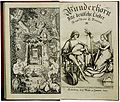 Des Knaben Wunderhorn III
 -
 Wordsworth on Helvellyn by Benjamin Robert Haydon
 -
 Byron 1813 by Phillips
 -
 Burns by Naysmith
 -
 Portrait of Sir Walter Scott by Sir Henry Raeburn
 -
 Frenzied Romans at the First Performance of Hernani by Jean-Jacques Grandville

.jpg)

_-_Google_Art_Project_(cropped).jpg)


.jpg)


