Vampire: Difference between revisions
CSV import |
CSV import |
||
| Line 1: | Line 1: | ||
''' | ==Vampire== | ||
A '''vampire''' is a mythical creature that subsists by feeding on the vital essence (generally in the form of blood) of the living. In European folklore, vampires are undead creatures that often visited loved ones and caused mischief or deaths in the neighborhoods they inhabited when they were alive. They wore shrouds and were often described as bloated and of ruddy or dark countenance, markedly different from today's gaunt, pale vampire which dates from the early 19th century. | |||
==Etymology== | ==Etymology== | ||
The | The term "vampire" was popularized in the early 18th century after an influx of vampire superstition into Western Europe from areas where vampire legends were frequent, such as the Balkans and Eastern Europe, although local variants were also known by different names, such as "vrykolakas" in Greece and "strigoi" in Romania. | ||
==Historical Background== | |||
Vampire legends have been recorded in many cultures around the world. The Mesopotamians, Hebrews, Ancient Greeks, and Romans had tales of demons and spirits which are considered precursors to modern vampires. However, it is the folklore of Eastern Europe that is most closely associated with the modern vampire legend. | |||
===Eastern European Folklore=== | |||
In Eastern Europe, vampires were believed to be reanimated corpses that would rise from the grave to drink the blood of the living. The causes of vampirism were varied, including being bitten by a vampire, improper burial rituals, or being cursed. Methods of protection included garlic, holy water, and crucifixes. | |||
===Western Europe=== | |||
The vampire superstition spread to Western Europe in the 18th century, where it was met with skepticism and fear. The first recorded accounts of vampire activity in Western Europe were from the 1720s, with the cases of Peter Plogojowitz and Arnold Paole in Serbia. | |||
== | ==Literary Vampires== | ||
The vampire as we know it today began to take shape in the 19th century with the publication of works such as John Polidori's "[[The Vampyre]]" (1819), Bram Stoker's "[[Dracula]]" (1897), and Sheridan Le Fanu's "[[Carmilla]]" (1872). These works established many of the conventions of the vampire genre, including the vampire's aristocratic demeanor, its vulnerability to sunlight, and its aversion to garlic and holy symbols. | |||
== | ==Modern Interpretations== | ||
In the 20th and 21st centuries, the vampire has become a staple of popular culture, appearing in films, television series, and literature. Notable examples include the "[[Twilight]]" series, "[[Buffy the Vampire Slayer]]", and "[[True Blood]]". | |||
== | ==Related Pages== | ||
* [[Dracula]] | |||
* [[Nosferatu]] | |||
* [[Carmilla]] | |||
* [[Vampire folklore by region]] | * [[Vampire folklore by region]] | ||
==Gallery== | |||
<gallery> | |||
File:Philip_Burne-Jones_-_The_Vampire.jpg|''The Vampire'' by Philip Burne-Jones | |||
File:Edvard_Munch_-_Vampire_(1895)_-_Google_Art_Project.jpg|''Vampire'' by Edvard Munch | |||
File:Ernst6-thumb.gif|Illustration of a vampire | |||
File:GarlicBasket.jpg|Garlic, a traditional vampire deterrent | |||
File:Thebible33.jpg|The Bible, often used in vampire lore | |||
File:Salzburg_Kajetanerkirche_Weihwasserbecken.jpg|Holy water font | |||
File:Johann_Jacob_Kirstein_001.JPG|Vampire hunting kit | |||
File:Norre_naeraa_600px.jpg|Grave suspected of containing a vampire | |||
File:Vampire_skeleton_of_Sozopol_in_Sofia_PD_2012_06.JPG|Vampire skeleton of Sozopol | |||
File:Lilith_(John_Collier_painting).jpg|''Lilith'' by John Collier | |||
File:"Le_Vampire".jpg|''Le Vampire'' | |||
File:Dom_Augustin_Calmet.jpeg|Dom Augustin Calmet, vampire scholar | |||
File:Stilt_house,_Black_Thai_-_Vietnam_Museum_of_Ethnology_-_Hanoi,_Vietnam_-_DSC02781.JPG|Stilt house, similar to those in vampire folklore | |||
File:VampireE3.jpg|Vampire illustration | |||
File:The_Irish_Vampire_-_Punch_(24_October_1885),_199_-_BL.jpg|''The Irish Vampire'' | |||
File:Desmodus_rotundus_A_Catenazzi.jpg|Common vampire bat | |||
File:Varney_the_Vampire_or_the_Feast_of_Blood.jpg|''Varney the Vampire'' | |||
File:Carmilla.jpg|''Carmilla'' | |||
File:NosferatuShadow.jpg|''Nosferatu'' | |||
File:Bela_lugosi_dracula.jpg|Bela Lugosi as Dracula | |||
File:Jonathan_Frid_Barnabas_Collins_Dark_Shadows_1968.JPG|Jonathan Frid as Barnabas Collins | |||
</gallery> | |||
[[Category:Vampires]] | [[Category:Vampires]] | ||
[[Category: | [[Category:Mythological creatures]] | ||
[[Category:European folklore]] | [[Category:European folklore]] | ||
Latest revision as of 01:23, 10 February 2025
Vampire[edit]
A vampire is a mythical creature that subsists by feeding on the vital essence (generally in the form of blood) of the living. In European folklore, vampires are undead creatures that often visited loved ones and caused mischief or deaths in the neighborhoods they inhabited when they were alive. They wore shrouds and were often described as bloated and of ruddy or dark countenance, markedly different from today's gaunt, pale vampire which dates from the early 19th century.
Etymology[edit]
The term "vampire" was popularized in the early 18th century after an influx of vampire superstition into Western Europe from areas where vampire legends were frequent, such as the Balkans and Eastern Europe, although local variants were also known by different names, such as "vrykolakas" in Greece and "strigoi" in Romania.
Historical Background[edit]
Vampire legends have been recorded in many cultures around the world. The Mesopotamians, Hebrews, Ancient Greeks, and Romans had tales of demons and spirits which are considered precursors to modern vampires. However, it is the folklore of Eastern Europe that is most closely associated with the modern vampire legend.
Eastern European Folklore[edit]
In Eastern Europe, vampires were believed to be reanimated corpses that would rise from the grave to drink the blood of the living. The causes of vampirism were varied, including being bitten by a vampire, improper burial rituals, or being cursed. Methods of protection included garlic, holy water, and crucifixes.
Western Europe[edit]
The vampire superstition spread to Western Europe in the 18th century, where it was met with skepticism and fear. The first recorded accounts of vampire activity in Western Europe were from the 1720s, with the cases of Peter Plogojowitz and Arnold Paole in Serbia.
Literary Vampires[edit]
The vampire as we know it today began to take shape in the 19th century with the publication of works such as John Polidori's "The Vampyre" (1819), Bram Stoker's "Dracula" (1897), and Sheridan Le Fanu's "Carmilla" (1872). These works established many of the conventions of the vampire genre, including the vampire's aristocratic demeanor, its vulnerability to sunlight, and its aversion to garlic and holy symbols.
Modern Interpretations[edit]
In the 20th and 21st centuries, the vampire has become a staple of popular culture, appearing in films, television series, and literature. Notable examples include the "Twilight" series, "Buffy the Vampire Slayer", and "True Blood".
Related Pages[edit]
Gallery[edit]
-
 The Vampire by Philip Burne-Jones
 -
 Vampire by Edvard Munch
 -
Illustration of a vampire
-
 Garlic, a traditional vampire deterrent
 -
 The Bible, often used in vampire lore
 -
 Holy water font
 -
 Vampire hunting kit
 -
 Grave suspected of containing a vampire
 -
 Vampire skeleton of Sozopol
 -
 Lilith by John Collier
 -
 Le Vampire
 -
 Dom Augustin Calmet, vampire scholar
 -
 Stilt house, similar to those in vampire folklore
 -
 Vampire illustration
 -
 The Irish Vampire
 -
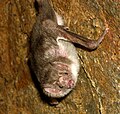 Common vampire bat
 -
 Varney the Vampire
 -
 Carmilla
 -
Nosferatu
-
 Bela Lugosi as Dracula
 -
 Jonathan Frid as Barnabas Collins

_-_Google_Art_Project.jpg)


.jpg)


,_199_-_BL.jpg)


