Hunger: Difference between revisions
CSV import |
CSV import Tags: mobile edit mobile web edit |
||
| Line 35: | Line 35: | ||
{{stub}} | {{stub}} | ||
<gallery> | |||
File:Civil_Rights_March_on_Washington,_D.C._(Dr._Martin_Luther_King,_Jr._and_Mathew_Ahmann_in_a_crowd.)_-_NARA_-_542015_-_Restoration.jpg|Civil Rights March on Washington, D.C. | |||
File:The_Hunger_March_in_Copenhagen_(dk).JPG|The Hunger March in Copenhagen | |||
File:In_2022,_Asia_was_home_to_55_percent_(402_million)_of_the_people_in_the_world_affected_by_hunger,_while_more_than_38_percent_(282_million)_lived_in_Africa.svg|In 2022, Asia was home to 55 percent of the people in the world affected by hunger | |||
File:Global_hunger_remained_virtually_unchanged_from_2021_to_2022_but_is_still_far_above_pre-Covid-19-pandemic_levels.svg|Global hunger remained virtually unchanged from 2021 to 2022 | |||
File:Unemployed_men_queued_outside_a_depression_soup_kitchen_opened_in_Chicago_by_Al_Capone,_02-1931_-_NARA_-_541927.jpg|Unemployed men queued outside a depression soup kitchen opened in Chicago by Al Capone | |||
File:Hunger_-_For_three_years_America_has_fought_starvation_in_Belgium_-_Will_you_eat_less_wheat,_meat,_fats_and_sugar_that_we_may_still_send_food_in_ship_loads?_-_DPLA_-_99ce44df6c024ced4d69ce75d6ebe7d1.jpg|Hunger - For three years America has fought starvation in Belgium | |||
File:Irrigation1.jpg|Irrigation | |||
File:Food_Assistance_Convention.svg|Food Assistance Convention | |||
File:Prime_Minister's_Olympic_hunger_summit_(7772208606).jpg|Prime Minister's Olympic hunger summit | |||
File:Sahel_Map-Africa_rough.png|Sahel Map-Africa | |||
File:Passing_out_groceries.jpg|Passing out groceries | |||
File:MontrealSoupKitchen1931.jpg|Montreal Soup Kitchen 1931 | |||
</gallery> | |||
Latest revision as of 21:41, 23 February 2025
Hunger is a physiological need for food. It is a complex phenomenon influenced by various factors including physical, psychological, and environmental factors. The sensation of hunger is controlled by the brain, specifically the hypothalamus, which receives signals from the body about the level of hunger and satiety.
Physiology of Hunger[edit]
The body has a complex system to regulate food intake. This system involves hormones such as ghrelin, leptin, and insulin, which are produced by the body and act on the brain to regulate hunger and satiety. Ghrelin is produced by the stomach and increases hunger, while leptin is produced by fat cells and decreases hunger. Insulin, produced by the pancreas, also plays a role in regulating hunger and satiety.
Causes of Hunger[edit]
Hunger can be caused by a variety of factors. These include:
- Physical factors: These include the body's need for energy and nutrients. When the body's stores of energy and nutrients are low, it signals the brain to initiate feelings of hunger.
- Psychological factors: These include stress, boredom, and emotional distress. These factors can trigger feelings of hunger even when the body does not need additional energy or nutrients.
- Environmental factors: These include the availability and accessibility of food, as well as social and cultural factors. For example, in some cultures, it is customary to eat at certain times of the day, regardless of whether or not one is physically hungry.
Effects of Hunger[edit]
Hunger can have various effects on the body and mind. These include:
- Physical effects: These include fatigue, dizziness, and weakness. If prolonged, hunger can lead to malnutrition and serious health problems.
- Psychological effects: These include irritability, difficulty concentrating, and depression. Hunger can also lead to overeating and the development of eating disorders.
- Social effects: Hunger can lead to social problems such as poverty and social inequality. It can also affect a person's ability to work and function in society.
See Also[edit]
References[edit]
<references />
 | |
|---|---|
 |
 |
-
 Civil Rights March on Washington, D.C.
 -
 The Hunger March in Copenhagen
 -
 In 2022, Asia was home to 55 percent of the people in the world affected by hunger
 -
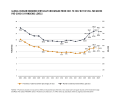 Global hunger remained virtually unchanged from 2021 to 2022
 -
 Unemployed men queued outside a depression soup kitchen opened in Chicago by Al Capone
 -
 Hunger - For three years America has fought starvation in Belgium
 -
 Irrigation
 -
 Food Assistance Convention
 -
 Prime Minister's Olympic hunger summit
 -
 Sahel Map-Africa
 -
 Passing out groceries
 -
 Montreal Soup Kitchen 1931
_-_NARA_-_542015_-_Restoration.jpg)
.JPG)
_of_the_people_in_the_world_affected_by_hunger,_while_more_than_38_percent_(282_million)_lived_in_Africa.svg)


.jpg)


