Rattan: Difference between revisions
CSV import |
CSV import |
||
| Line 28: | Line 28: | ||
{{stub}} | {{stub}} | ||
<gallery> | |||
File:Thatiyan_Cuural_(Malayalam-_തടിയന്_ചൂരല്)_(5661614812).jpg|Thatiyan Cuural | |||
File:Daemonorops_mollis_(rattan_palm)_-_Bukidnon_Philippines.jpg|Daemonorops mollis (rattan palm) | |||
File:Rattan_Palm_(Calamus_rotang)_with_fruits_(7844049166).jpg|Rattan Palm (Calamus rotang) with fruits | |||
File:Sulawesi_trsr_ph20.jpg|Sulawesi | |||
File:Plectoc_elon_071211-2481_kbdg.JPG|Plectoc elon | |||
File:USAID_Measuring_Impact_Conservation_Enterprise_Retrospective_(Philippines;_Nagkakaisang_Tribu_ng_Palawan)_(39395623355).jpg|USAID Measuring Impact Conservation Enterprise Retrospective (Philippines; Nagkakaisang Tribu ng Palawan) | |||
File:USAID_Measuring_Impact_Conservation_Enterprise_Retrospective_(Philippines;_Nagkakaisang_Tribu_ng_Palawan)_(39395668055).jpg|USAID Measuring Impact Conservation Enterprise Retrospective (Philippines; Nagkakaisang Tribu ng Palawan) | |||
File:Pickled_Littuko_Calamus_manillensis_vinegar3.jpg|Pickled Littuko Calamus manillensis vinegar | |||
File:066a_Josepinism_Style_Furniture.jpg|Josepinism Style Furniture | |||
File:COLLECTIE_TROPENMUSEUM_Indonesiërs_maken_meubelstukken_van_rotan_Zuid-Celebes_TMnr_10011484.jpg|Indonesiërs maken meubelstukken van rotan Zuid-Celebes | |||
File:Rattan_chair.jpg|Rattan chair | |||
File:Rattan_sepak_tawraw_ball.png|Rattan sepak tawraw ball | |||
</gallery> | |||
Latest revision as of 21:18, 23 February 2025
Rattan is a type of climbing or trailing plant of the palm family. It is known for its strong, flexible canes, which are used in the production of furniture, baskets, and other items. Rattan is native to the tropical regions of Africa, Asia, and Australasia.
Description[edit]
Rattan plants are large, climbing palms with long, flexible stems. They are typically found in tropical rainforests, where they use trees as support to reach sunlight. The stems, which can be up to 600 feet in length, are solid and tough, making them ideal for use in furniture and basketry.
Uses[edit]
Rattan is used in a variety of ways. The most common use is in the production of furniture, including chairs, tables, and beds. The flexibility of the canes allows them to be bent and shaped into a variety of forms, while their strength ensures that the furniture is durable.
In addition to furniture, rattan is also used to make baskets and other woven items. The canes can be split into thin strips and woven together to create intricate patterns. This technique is used to create a wide range of items, from simple baskets to complex decorative pieces.
Rattan is also used in the construction industry, where it is used as a binding material. The canes can be tied together to form a strong, flexible bond, making them ideal for use in the construction of buildings and bridges.
Cultivation[edit]
Rattan is cultivated in several tropical regions around the world. The plants require a warm, humid climate and plenty of rainfall. They are typically grown in plantations, where they are harvested for their canes.
Environmental Impact[edit]
The harvesting of rattan can have a significant impact on the environment. In some areas, the demand for rattan has led to over-harvesting, resulting in the loss of forest habitat. However, efforts are being made to promote sustainable harvesting practices and to develop alternatives to wild-harvested rattan.
See Also[edit]
 | |
|---|---|
 |
 |
-
 Thatiyan Cuural
 -
 Daemonorops mollis (rattan palm)
 -
 Rattan Palm (Calamus rotang) with fruits
 -
 Sulawesi
 -
 Plectoc elon
 -
 USAID Measuring Impact Conservation Enterprise Retrospective (Philippines; Nagkakaisang Tribu ng Palawan)
 -
 USAID Measuring Impact Conservation Enterprise Retrospective (Philippines; Nagkakaisang Tribu ng Palawan)
 -
 Pickled Littuko Calamus manillensis vinegar
 -
 Josepinism Style Furniture
 -
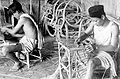 Indonesiërs maken meubelstukken van rotan Zuid-Celebes
 -
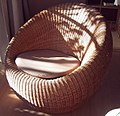 Rattan chair
 -
 Rattan sepak tawraw ball
_(5661614812).jpg)
_-_Bukidnon_Philippines.jpg)
_with_fruits_(7844049166).jpg)


_(39395623355).jpg)
_(39395668055).jpg)


