Fugue: Difference between revisions
CSV import |
CSV import |
||
| Line 31: | Line 31: | ||
{{stub}} | {{stub}} | ||
<gallery> | |||
File:Ricercare_a_6_from_The_Musical_Offering.jpg|Fugue | |||
File:Interval_Inversion.jpg|Fugue | |||
File:Wiki-fugue-analysis.jpg|Fugue | |||
File:Wiki_fugue_analysis_audio.mid|Fugue | |||
File:Fischer-fugue1.png|Fugue | |||
File:Fugue_in_C_major_by_Johann_Caspar_Ferdinand_Fischer.mid|Fugue | |||
File:Jupiter_finale.png|Fugue | |||
File:Mozart_Symphony_41,_finale,_fugal_passage.wav|Fugue | |||
File:Beethoven_Op_131.png|Fugue | |||
File:Liszt_B_minor_sonata_fugue_subject.png|Fugue | |||
</gallery> | |||
Latest revision as of 12:25, 18 February 2025
Fugue is a rare psychiatric disorder characterized by reversible amnesia for personal identity, including the memories, personality, and other identifying characteristics of individuality. The state is usually short-lived (ranging from hours to days), but can last months or longer. Dissociative fugue usually involves unplanned travel or wandering, and is sometimes accompanied by the establishment of a new identity.
Causes[edit]
The exact cause of dissociative fugue is not known, but it is often linked to severe stress, which might be the result of traumatic events — such as war, abuse, accidents, disasters, or extreme violence — that the person has experienced or witnessed.
Symptoms[edit]
The primary symptom of a fugue is sudden, unexpected travel away from home or one's customary place of work, with inability to recall some or all of one's past. Most people with a fugue state appear normal and do not attract attention. When attention is attracted, however, the person may appear confused or disoriented.
Diagnosis[edit]
Diagnosis of fugue state is clinical, based on history of sudden unexpected travel, amnesia, and confusion or disorientation. It is often difficult to diagnose because of the similarity to other conditions, such as dementia or psychosis.
Treatment[edit]
Treatment for fugue is aimed at relieving symptoms and controlling any problem behavior. Treatment generally involves psychotherapy to help the person explore personal conflicts and reduce the effects of stress. Medication is rarely used or needed.
Prognosis[edit]
The outlook for people with fugue is quite variable. Some people recover quickly, others may take several months. The severity of the fugue is often related to the severity of any underlying psychiatric disorders.
See also[edit]
 | This medical article is a stub. You can help WikiMD by expanding the page. |
-
 Fugue
Fugue -
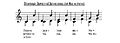 Fugue
Fugue -
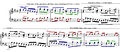 Fugue
Fugue -
Fugue
-
 Fugue
Fugue -
Fugue
-
 Fugue
Fugue -
Fugue
-
 Fugue
Fugue -
 Fugue
Fugue


