Doppler effect: Difference between revisions
CSV import |
CSV import |
||
| Line 42: | Line 42: | ||
{{stub}} | {{stub}} | ||
== Doppler effect == | |||
<gallery> | |||
File:Doppler_effect_diagrammatic.svg|Doppler effect diagrammatic | |||
File:Dopplerfrequenz.gif|Doppler frequency | |||
File:Picture_of_the_first_'wall_formula'_in_the_city_of_Utrecht_01.jpg|Picture of the first 'wall formula' in the city of Utrecht | |||
File:Dopplereffectstationary.gif|Doppler effect stationary | |||
File:Dopplereffectsourcemovingrightatmach0.7.gif|Doppler effect source moving right at mach 0.7 | |||
File:Dopplereffectsourcemovingrightatmach1.0.gif|Doppler effect source moving right at mach 1.0 | |||
File:Dopplereffectsourcemovingrightatmach1.4.gif|Doppler effect source moving right at mach 1.4 | |||
File:Juli_2016_-_Spoedtransport,_Huisarts,_Brandweer,_Politie_en_Ambulances_met_spoed_in_Rotterdam_-451.webm|Emergency transport in Rotterdam | |||
File:Redshift.svg|Redshift | |||
File:radar_gun.jpg|Radar gun | |||
File:CarotidDoppler1.jpg|Carotid Doppler | |||
File:SatDoppler.png|Satellite Doppler | |||
</gallery> | |||
Latest revision as of 21:35, 23 February 2025
Doppler effect is a phenomenon observed in the fields of Physics and Sound where there is a change in frequency or wavelength of a wave in relation to an observer who is moving relative to the wave source. It is named after the Austrian physicist Christian Doppler, who proposed it in 1842 in Prague.
Overview[edit]
The Doppler effect can be described as the effect produced by a moving source of waves in which there is an apparent upward shift in frequency for observers towards whom the source is approaching and an apparent downward shift in frequency for observers from whom the source is receding. It is commonly heard when a vehicle sounding a siren or horn approaches, passes, and recedes from an observer.
Mathematical Representation[edit]
The formula for the Doppler effect is derived from the definitions of velocity and acceleration. The formula is:
f' = f (v + vo) / (v + vs)
where:
- f' is the observed frequency,
- f is the emitted frequency,
- v is the speed of sound in air,
- vo is the speed of the observer,
- vs is the speed of the source.
Applications[edit]
The Doppler effect is utilized in many areas of science and technology. Some of the applications include:
- Astronomy: The Doppler effect is used in astronomy to measure the velocity at which stars and galaxies are approaching or receding from us, that is, their radial velocities. This is used to detect if an apparently single star is, in fact, a close binary and even to measure the rotational speed of stars and galaxies.
- Medical Imaging and Blood Flow Measurement: The Doppler effect is used in medical imaging and blood flow measurement to measure the direction and speed of blood flow through the heart and major arteries.
- Radar: The Doppler effect is used in radar to measure the velocity of detected objects. This can be used to measure the speed of a car or the speed and direction of a weather system.
See Also[edit]
 | |
|---|---|
 |
 |
Doppler effect[edit]
-
 Doppler effect diagrammatic
 -
 Doppler frequency
 -
 Picture of the first 'wall formula' in the city of Utrecht
 -
 Doppler effect stationary
 -
 Doppler effect source moving right at mach 0.7
 -
 Doppler effect source moving right at mach 1.0
 -
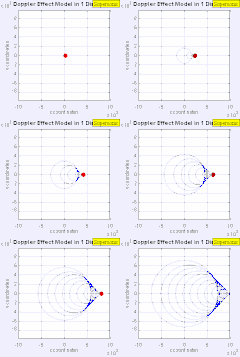 Doppler effect source moving right at mach 1.4
 -
 Emergency transport in Rotterdam
 -
 Redshift
 -
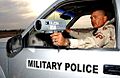 Radar gun
 -
 Carotid Doppler
 -
 Satellite Doppler


