Medial pterygoid muscle: Difference between revisions
CSV import |
CSV import |
||
| Line 33: | Line 33: | ||
This is a basic structure and you can add more sections as needed. Remember to always cite your sources and follow the guidelines of the specific wiki you are contributing to. | This is a basic structure and you can add more sections as needed. Remember to always cite your sources and follow the guidelines of the specific wiki you are contributing to. | ||
<gallery> | |||
File:Medial_pterygoid_muscle_animation_small.gif|Medial pterygoid muscle | |||
File:Gray169.png|Medial pterygoid muscle | |||
File:Gray177.png|Medial pterygoid muscle | |||
File:Gray510.png|Medial pterygoid muscle | |||
File:Gray778.png|Medial pterygoid muscle | |||
File:Gray782_updated.png|Medial pterygoid muscle | |||
File:Gray1031.png|Medial pterygoid muscle | |||
File:Slide6che.JPG|Medial pterygoid muscle | |||
File:Medial_pterygoid_muscle.jpg|Medial pterygoid muscle | |||
File:Medial_pterygoid_muscle_2.jpg|Medial pterygoid muscle | |||
File:Slide7rr.JPG|Medial pterygoid muscle | |||
File:Slide1vv.JPG|Medial pterygoid muscle | |||
</gallery> | |||
Latest revision as of 12:22, 18 February 2025
| General Information | |
|---|---|
| Latin | Musculus pterygoideus medialis |
| Greek | |
| TA98 | |
| TA2 | |
| FMA | |
| Details | |
| System | Muscular system |
| Artery | |
| Vein | |
| Nerve | Mandibular nerve |
| Lymphatic drainage | |
| Precursor | |
| Function | |
| Identifiers | |
| Clinical significance | |
| Notes | |
The Medial Pterygoid Muscle is one of the muscles of mastication. It is a thick, quadrilateral muscle that is similar in structure and function to the masseter muscle.
Origin and Insertion[edit]
The Medial Pterygoid Muscle originates from the medial surface of the lateral pterygoid plate, the pyramidal process of the palatine bone, and the maxillary tuberosity. It inserts into the medial surface of the angle and lower half of the ramus of the mandible.
Function[edit]
The Medial Pterygoid Muscle works in conjunction with the lateral pterygoid muscle to allow the jaw to open and close, and to move side to side. It also helps to elevate and protrude the mandible.
Clinical Significance[edit]
Dysfunction of the Medial Pterygoid Muscle can lead to temporomandibular joint disorder, a condition that can cause pain and difficulty in moving the jaw.
See Also[edit]
```
This is a basic structure and you can add more sections as needed. Remember to always cite your sources and follow the guidelines of the specific wiki you are contributing to.
-
 Medial pterygoid muscle
 -
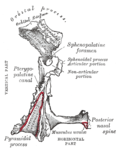 Medial pterygoid muscle
 -
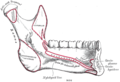 Medial pterygoid muscle
 -
 Medial pterygoid muscle
 -
 Medial pterygoid muscle
 -
 Medial pterygoid muscle
 -
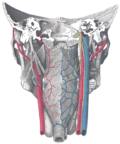 Medial pterygoid muscle
 -
 Medial pterygoid muscle
 -
 Medial pterygoid muscle
 -
 Medial pterygoid muscle
 -
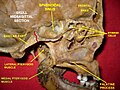 Medial pterygoid muscle
 -
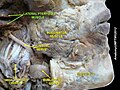 Medial pterygoid muscle


