Mackintosh's: Difference between revisions
CSV import Tags: mobile edit mobile web edit |
CSV import |
||
| (One intermediate revision by the same user not shown) | |||
| Line 44: | Line 44: | ||
[[Category:Art Nouveau Architecture]] | [[Category:Art Nouveau Architecture]] | ||
[[Category:Glasgow Landmarks]] | [[Category:Glasgow Landmarks]] | ||
<gallery> | |||
File:Mackintosh_logo.png|Mackintosh's | |||
File:John_and_violet_mackintosh.jpg|John and Violet Mackintosh | |||
File:Mackintosh_toffee_king_ad_1906.jpg|Mackintosh Toffee King Ad 1906 | |||
File:Mackintosh's_Quality_Street_Tin.jpg|Mackintosh's Quality Street Tin | |||
File:Toffee-Crisp-Split.jpg|Toffee Crisp Split | |||
</gallery> | |||
<gallery> | |||
File:Mackintosh logo.png|Mackintosh's | |||
File:John and violet mackintosh.jpg|John and Violet Mackintosh | |||
File:Mackintosh toffee king ad 1906.jpg|Mackintosh's Toffee King Ad 1906 | |||
File:Mackintosh's Quality Street Tin.jpg|Mackintosh's Quality Street Tin | |||
File:Toffee-Crisp-Split.jpg|Toffee Crisp Split | |||
</gallery> | |||
Latest revision as of 01:39, 20 February 2025
Article Title: Mackintosh's: A Historic Landmark in the Heart of Glasgow
Mackintosh's is a historic building located in the heart of Glasgow, Scotland. Designed by renowned architect Charles Rennie Mackintosh, it stands as a testament to his innovative and influential architectural style. Completed in 1896, Mackintosh's is a prime example of the Art Nouveau movement.
History[edit]
Mackintosh's was commissioned by a local businessman, John Honeyman, who wanted a building that would serve as both a commercial space and a residence. He entrusted the project to Charles Rennie Mackintosh, a young and talented architect at the time. Mackintosh's design was a departure from the prevailing architectural styles of the era, incorporating organic forms and intricate detailing.
The building quickly became a symbol of Glasgow's burgeoning artistic and cultural scene. It housed various businesses, including a tearoom, a furniture showroom, and artists' studios. Mackintosh's innovative use of space and light, combined with his attention to detail, made it a popular gathering place for artists, intellectuals, and socialites.
Architecture[edit]
Mackintosh's is characterized by its distinctive Art Nouveau style, which is evident in its exterior and interior design. The building features a symmetrical facade with decorative motifs inspired by nature, such as flowers, leaves, and geometric patterns. Mackintosh's attention to detail is evident in the intricate ironwork, stained glass windows, and carved woodwork that adorn the building.
The interior of Mackintosh's is equally impressive, with each room meticulously designed to create a harmonious and functional space. The tearoom, in particular, is a masterpiece of design, with its high-backed chairs, geometrically patterned carpets, and elegant light fixtures. Mackintosh's use of light and color further enhances the overall aesthetic appeal of the building.
Legacy[edit]
Mackintosh's has had a lasting impact on the world of architecture and design. Charles Rennie Mackintosh's innovative approach to space, form, and materials continues to inspire architects and artists to this day. The building itself has been recognized as a national treasure and is now a popular tourist attraction in Glasgow.
(date needed)
See also[edit]
References[edit]
<references group="" responsive="1"></references>
-
 Mackintosh's
 -
 John and Violet Mackintosh
 -
 Mackintosh Toffee King Ad 1906
 -
 Mackintosh's Quality Street Tin
 -
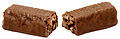 Toffee Crisp Split


-
Mackintosh's
-
John and Violet Mackintosh
-
Mackintosh's Toffee King Ad 1906
-
Mackintosh's Quality Street Tin
-
Toffee Crisp Split
