Carminic acid: Difference between revisions
CSV import |
CSV import |
||
| Line 36: | Line 36: | ||
[[Category:Cosmetics]] | [[Category:Cosmetics]] | ||
[[Category:Textiles]] | [[Category:Textiles]] | ||
<gallery> | |||
File:Carminic_acid_structure.svg|Structure of carminic acid | |||
File:Carminic-acid-3D-balls.png|3D model of carminic acid | |||
File:Dactylopius_coccus_(Barlovento)_04_ies.jpg|Dactylopius coccus insect | |||
File:Dactylopius_coccus_(8410000864).jpg|Dactylopius coccus on cactus | |||
File:Cochineal_drawing.jpg|Drawing of cochineal insects | |||
File:Biosynthesis_of_carminic_acid.jpg|Biosynthesis of carminic acid | |||
</gallery> | |||
Latest revision as of 10:58, 18 February 2025
Carminic acid is a natural red pigment derived from the cochineal insect, commonly found in Central and South America. It has been used for centuries as a dye and colorant in various industries, including food, cosmetics, and textiles. In this article, we will explore the properties, uses, and production of carminic acid.
Properties[edit]
Carminic acid is a water-soluble compound that belongs to the anthraquinone family. It is highly stable and resistant to heat, light, and pH changes, making it an ideal pigment for a wide range of applications. Its chemical formula is C22H20O13, and its molecular weight is 492.39 g/mol.
Uses[edit]
Food Industry[edit]
Carminic acid is widely used as a natural food coloring agent, particularly in the production of red and pink shades. It is commonly found in various food products, including beverages, confectionery, dairy products, and processed meats. Due to its stability and safety profile, it is considered a suitable alternative to synthetic food dyes.
Cosmetics Industry[edit]
In the cosmetics industry, carminic acid is used as a colorant in various products, such as lipsticks, blushes, and eyeshadows. Its vibrant red hue provides an attractive and long-lasting color payoff. Additionally, its natural origin appeals to consumers seeking eco-friendly and sustainable cosmetic options.
Textile Industry[edit]
Carminic acid is also utilized in the textile industry for dyeing fabrics. It can be applied to both natural and synthetic fibers, providing a range of red shades. Its resistance to fading and washing makes it a popular choice for dyeing textiles, ensuring the longevity of the color.
Production[edit]
The production of carminic acid involves the cultivation and harvesting of the cochineal insect (Dactylopius coccus). These insects feed on the sap of certain cacti, primarily the Opuntia species. The female cochineal insects contain a high concentration of carminic acid in their bodies, which is extracted through a process known as "carmine production."
During carmine production, the insects are carefully collected from the cacti and dried. The dried insects are then crushed, and the resulting powder is treated with an acidic solution to extract the carminic acid. The extracted pigment is further processed and purified to obtain a high-quality carminic acid powder or liquid.
Safety Considerations[edit]
Carminic acid is generally considered safe for consumption and use in various industries. However, individuals with known allergies to cochineal insects or carmine-based products should exercise caution. Additionally, regulatory bodies such as the Food and Drug Administration (FDA) and the European Food Safety Authority (EFSA) have established guidelines and maximum permitted levels for carminic acid usage in food and cosmetics.
See Also[edit]
References[edit]
<references />
-
 Structure of carminic acid
 -
 3D model of carminic acid
 -
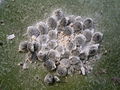 Dactylopius coccus insect
 -
 Dactylopius coccus on cactus
 -
 Drawing of cochineal insects
 -
Biosynthesis of carminic acid


_04_ies.jpg)
.jpg)


