Lichtheimia corymbifera: Difference between revisions
CSV import |
No edit summary |
||
| (One intermediate revision by the same user not shown) | |||
| Line 26: | Line 26: | ||
{{Fungi-stub}} | {{Fungi-stub}} | ||
{{Medicine-stub}} | {{Medicine-stub}} | ||
==Lichtheimia corymbifera== | |||
<gallery> | |||
File:Absidia corymbifera.jpg|Absidia corymbifera | |||
File:Absidia corymbifera apophysis.jpeg|Absidia corymbifera apophysis | |||
File:Absidia corymbifera sporangium.jpg|Absidia corymbifera sporangium | |||
</gallery> | |||
Latest revision as of 00:35, 17 March 2025
Lichtheimia corymbifera is a species of fungus that belongs to the family Lichtheimiaceae. It is a thermophilic fungus, meaning it thrives in high-temperature environments. L. corymbifera is one of the most common causes of mucormycosis, a serious and often deadly fungal infection.
Taxonomy[edit]
Lichtheimia corymbifera was first described in 1896 by German mycologist Karl Lichtheim. The genus name Lichtheimia is derived from his surname, while the species name corymbifera refers to the corymb-like structure of its sporangia.
Description[edit]
L. corymbifera is a saprophytic fungus, meaning it feeds on dead or decaying organic matter. It produces large, round sporangia that are filled with numerous spores. These spores are released into the environment and can cause infection if inhaled or ingested by a susceptible host.
Pathogenicity[edit]
L. corymbifera is a pathogenic fungus that can cause mucormycosis, a serious fungal infection that primarily affects individuals with weakened immune systems. The infection can manifest in various forms, including rhinocerebral, pulmonary, cutaneous, gastrointestinal, and disseminated mucormycosis. Treatment typically involves antifungal medications and surgical debridement of infected tissues.
Epidemiology[edit]
L. corymbifera is found worldwide, but it is most common in tropical and subtropical regions. It is often found in soil, decaying vegetation, and compost piles. Infections are relatively rare but can be severe or fatal, particularly in individuals with weakened immune systems.
Research[edit]
Research on L. corymbifera has focused on understanding its pathogenicity and developing effective treatments for mucormycosis. Recent studies have also explored its potential for biotechnological applications, such as the production of biofuels and enzymes.


Lichtheimia corymbifera[edit]
-
 Absidia corymbifera
 -
 Absidia corymbifera apophysis
 -
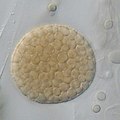 Absidia corymbifera sporangium


