Cantilever bridge: Difference between revisions
CSV import |
CSV import |
||
| (2 intermediate revisions by the same user not shown) | |||
| Line 1: | Line 1: | ||
= | {{Infobox medical device | ||
| name = Cantilever bridge | |||
| image = | |||
| caption = | |||
| uses = Dental restoration | |||
| inventor = | |||
| manufacturer = | |||
| model = | |||
| introduced = | |||
| related = [[Dental bridge]], [[Dental crown]], [[Dental implant]] | |||
}} | |||
{{ | A '''cantilever bridge''' is a type of [[dental bridge]] used in [[restorative dentistry]] to replace a missing [[tooth]]. Unlike traditional bridges, which are supported by crowns on both sides of the missing tooth, a cantilever bridge is anchored on only one side. This makes it a suitable option in areas of the mouth where there is only one adjacent tooth available for support. | ||
== Design and Function == | |||
The cantilever bridge consists of a [[pontic]], which is the false tooth, and an [[abutment]], which is the supporting tooth. The abutment tooth is prepared to receive a [[dental crown]], which is then attached to the pontic. This design allows the pontic to "cantilever" out from the abutment tooth, filling the gap left by the missing tooth. | |||
== Indications == | |||
Cantilever bridges are typically used in areas of the mouth that experience less stress, such as the front teeth. They are not usually recommended for the back teeth, where the forces of [[mastication]] are greater, as this can lead to complications such as [[tooth fracture]] or [[bridge failure]]. | |||
== Advantages == | |||
* Requires less preparation of adjacent teeth compared to traditional bridges. | |||
* Can be a more cost-effective solution than [[dental implants]]. | |||
* Provides a fixed solution, unlike [[removable partial dentures]]. | |||
== Disadvantages == | |||
* Increased risk of [[tooth decay]] and [[gum disease]] around the abutment tooth. | |||
* Potential for [[tooth mobility]] or [[tooth fracture]] due to uneven distribution of forces. | |||
* Not suitable for all areas of the mouth. | |||
== Maintenance == | |||
Proper [[oral hygiene]] is crucial for the longevity of a cantilever bridge. Patients should maintain regular [[dental check-ups]] and clean around the bridge using [[floss]] and [[interdental brushes]] to prevent [[plaque]] accumulation and [[gum disease]]. | |||
== Alternatives == | |||
* [[Traditional dental bridge]] | |||
* [[Maryland bridge]] | |||
* [[Dental implant]] | |||
* [[Removable partial denture]] | |||
== See also == | |||
* [[Dental restoration]] | |||
* [[Prosthodontics]] | |||
* [[Tooth loss]] | |||
== References == | |||
* ["Cantilever Bridge." Dental Health Foundation.](https://www.dentalhealth.org/cantilever-bridge) | |||
* ["Dental Bridges." American Dental Association.](https://www.ada.org/resources/dental-bridges) | |||
{{Dental prosthetics}} | |||
[[Category:Dental materials]] | |||
[[Category:Dental procedures]] | |||
[[Category:Prosthodontics]] | |||
== Cantilever bridge gallery == | |||
<gallery> | |||
File:Pierre Pflimlin UC AdjAndCrop.jpg|Pierre Pflimlin Bridge | |||
File:Tibetan log bridge.JPG|Tibetan Log Bridge | |||
File:Cantilever bridge human model.jpg|Cantilever Bridge Human Model | |||
File:CooperRiverBridge.svg|Cooper River Bridge | |||
File:SFOBB-OldEastSpanDismantleCropped.png|San Francisco-Oakland Bay Bridge Old East Span Dismantle | |||
File:Quebec bridge pont de quebec.jpg|Quebec Bridge | |||
File:VejleFjordBridge.jpg|Vejle Fjord Bridge | |||
File:SFOakBrEastPartVEast.jpg|San Francisco-Oakland Bay Bridge East Part | |||
File:Howrah Bridge, Kolkata.jpg|Howrah Bridge, Kolkata | |||
File:ForthBridgeEdinburgh.jpg|Forth Bridge, Edinburgh | |||
</gallery> | |||
Latest revision as of 05:18, 3 March 2025
Cantilever bridge
This medical device related article is a stub.
A cantilever bridge is a type of dental bridge used in restorative dentistry to replace a missing tooth. Unlike traditional bridges, which are supported by crowns on both sides of the missing tooth, a cantilever bridge is anchored on only one side. This makes it a suitable option in areas of the mouth where there is only one adjacent tooth available for support.
Design and Function[edit]
The cantilever bridge consists of a pontic, which is the false tooth, and an abutment, which is the supporting tooth. The abutment tooth is prepared to receive a dental crown, which is then attached to the pontic. This design allows the pontic to "cantilever" out from the abutment tooth, filling the gap left by the missing tooth.
Indications[edit]
Cantilever bridges are typically used in areas of the mouth that experience less stress, such as the front teeth. They are not usually recommended for the back teeth, where the forces of mastication are greater, as this can lead to complications such as tooth fracture or bridge failure.
Advantages[edit]
- Requires less preparation of adjacent teeth compared to traditional bridges.
- Can be a more cost-effective solution than dental implants.
- Provides a fixed solution, unlike removable partial dentures.
Disadvantages[edit]
- Increased risk of tooth decay and gum disease around the abutment tooth.
- Potential for tooth mobility or tooth fracture due to uneven distribution of forces.
- Not suitable for all areas of the mouth.
Maintenance[edit]
Proper oral hygiene is crucial for the longevity of a cantilever bridge. Patients should maintain regular dental check-ups and clean around the bridge using floss and interdental brushes to prevent plaque accumulation and gum disease.
Alternatives[edit]
See also[edit]
References[edit]
- ["Cantilever Bridge." Dental Health Foundation.](https://www.dentalhealth.org/cantilever-bridge)
- ["Dental Bridges." American Dental Association.](https://www.ada.org/resources/dental-bridges)
Cantilever bridge gallery[edit]
-
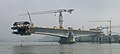 Pierre Pflimlin Bridge
 -
 Tibetan Log Bridge
 -
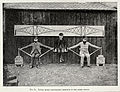 Cantilever Bridge Human Model
 -
 Cooper River Bridge
 -
 San Francisco-Oakland Bay Bridge Old East Span Dismantle
 -
 Quebec Bridge
 -
 Vejle Fjord Bridge
 -
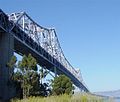 San Francisco-Oakland Bay Bridge East Part
 -
 Howrah Bridge, Kolkata
 -
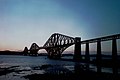 Forth Bridge, Edinburgh


