HN3 (nitrogen mustard): Difference between revisions
CSV import |
CSV import |
||
| Line 24: | Line 24: | ||
{{cancer-stub}} | {{cancer-stub}} | ||
<gallery> | |||
File:Trichlormethine.svg|Trichlormethine | |||
File:HN3-3D-vdW.png|HN3 3D vdW | |||
</gallery> | |||
Latest revision as of 21:09, 25 February 2025
HN3 (Nitrogen Mustard) is a chemical compound that belongs to the class of nitrogen mustards, which are cytotoxic chemotherapy agents used in the treatment of cancer. HN3, or tris(2-chloroethyl)amine, is the most potent compound in this class, known for its ability to alkylate DNA and thus interfere with the cell's replication process. This article provides an overview of HN3, including its chemical properties, mechanism of action, medical applications, and safety considerations.
Chemical Properties[edit]
HN3 is characterized by its chemical formula, C6H12Cl3N, indicating the presence of three chlorine atoms, which are essential for its alkylating activity. It is a colorless, oily liquid at room temperature, with a faint, musty smell. Due to its high reactivity, HN3 is stable under specific conditions and requires careful handling and storage.
Mechanism of Action[edit]
The primary mechanism of action of HN3 involves the alkylation of guanine bases in the DNA double helix, leading to cross-linking of DNA strands. This cross-linking prevents the DNA from being properly replicated and transcribed, which ultimately leads to cell death. HN3's cytotoxic effects are not specific to cancer cells, which means it can also harm rapidly dividing normal cells, leading to side effects.
Medical Applications[edit]
HN3 has been studied for its potential use in the treatment of various types of cancer, including lymphoma, leukemia, and ovarian cancer. Its ability to damage DNA makes it an effective agent against rapidly dividing cancer cells. However, due to its high toxicity and the development of newer, more targeted therapies, the use of HN3 in clinical practice has become less common.
Safety Considerations[edit]
The use of HN3 poses significant safety risks, both to patients and healthcare providers. Exposure to HN3 can lead to severe skin and eye irritation, respiratory distress, and long-term health effects such as an increased risk of developing secondary cancers. Proper protective measures, including the use of personal protective equipment (PPE) and specialized ventilation systems, are essential when handling HN3.
Regulation and Disposal[edit]
Due to its potential as a chemical weapon, the production, storage, and disposal of HN3 are regulated under various international treaties and local laws. Facilities that handle HN3 must adhere to strict security and environmental standards to prevent accidental release or misuse.
Conclusion[edit]
HN3 (Nitrogen Mustard) represents an important class of chemotherapy agents with a unique mechanism of action. While its use in modern medicine has declined due to its toxicity and the availability of better alternatives, understanding HN3's properties and effects contributes to the broader knowledge of chemotherapy and cancer treatment strategies.

-
 Trichlormethine
 -
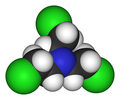 HN3 3D vdW


