Automated analyser: Difference between revisions
CSV import |
CSV import Tags: mobile edit mobile web edit |
||
| Line 49: | Line 49: | ||
{{medicine-stub}} | {{medicine-stub}} | ||
<gallery> | |||
File:Cobas_u_411.JPG|Cobas u 411 | |||
File:LabMachines.jpg|Lab Machines | |||
File:RACKS.jpg|Racks | |||
File:Tube_vacuette.jpg|Tube vacuette | |||
File:StaRRsed_Inversa,_automated_Westergren_based_ESR_'analyzer'.jpg|StaRRsed Inversa, automated Westergren based ESR analyzer | |||
</gallery> | |||
Latest revision as of 21:05, 25 February 2025
Automated analyser is a medical laboratory instrument designed to measure different chemicals and other characteristics in a number of biological samples quickly, with minimal human assistance. These instruments have revolutionized the fields of clinical chemistry, hematology, immunology, and microbiology, among others, by providing fast, accurate, and repeatable results. Automated analysers have become indispensable in hospitals and laboratories for routine blood tests, drug testing, metabolic functions, and disease detection.
History[edit]
The development of automated analysers dates back to the 1950s, with the introduction of the AutoAnalyzer by Technicon Corporation. This machine was the first of its kind to perform blood and urine tests automatically. Since then, technology has advanced significantly, leading to the development of more sophisticated systems capable of performing a multitude of tests simultaneously.
Types of Automated Analysers[edit]
Automated analysers can be broadly classified into two categories based on their application: clinical chemistry analysers and hematology analysers.
Clinical Chemistry Analysers[edit]
These instruments are used to measure concentrations of biochemical analytes in body fluids, such as blood serum, urine, and cerebrospinal fluid. They can test for a wide range of substances, including glucose, cholesterol, proteins, enzymes, and electrolytes.
Hematology Analysers[edit]
Hematology analysers are used to perform complete blood counts (CBC), including measurements of red blood cells, white blood cells, hemoglobin, hematocrit, and platelets. Some advanced models can also identify and quantify different types of white blood cells.
Technology[edit]
Automated analysers operate using various technologies, including photometry, chemiluminescence, immunoassay techniques, and flow cytometry. The choice of technology depends on the type of test and the required sensitivity and specificity.
Photometry[edit]
Photometry is the most common technology used in clinical chemistry analysers. It involves measuring the intensity of light absorbed or emitted by a solution to determine the concentration of an analyte.
Chemiluminescence[edit]
Chemiluminescence is used in immunoassays and involves measuring the light emitted by a chemical reaction as an indicator of the presence and quantity of an analyte.
Flow Cytometry[edit]
Flow cytometry is primarily used in hematology analysers. It involves passing cells through a laser beam and measuring the scattered light to determine various properties of the cells, such as size and complexity.
Advantages[edit]
Automated analysers offer numerous advantages over manual testing methods, including:
- Speed: They can process hundreds of samples per hour, significantly faster than manual methods.
- Accuracy: Automated systems reduce the risk of human error, providing more reliable results.
- Repeatability: They ensure consistent results, which is crucial for monitoring patient conditions over time.
- Efficiency: Automation frees up laboratory personnel to focus on more complex tasks that require human expertise.
Challenges[edit]
Despite their benefits, automated analysers also present challenges, such as:
- Cost: The initial investment and maintenance costs can be high.
- Complexity: Operating these instruments requires specialized training.
- Dependence: Over-reliance on automated systems can lead to skill degradation among laboratory staff.
Future Directions[edit]
The future of automated analysers lies in the integration of artificial intelligence (AI) and machine learning technologies to further enhance their capabilities. These advancements could lead to more personalized medicine by enabling more precise and predictive analyses.

-
 Cobas u 411
 -
 Lab Machines
 -
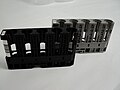 Racks
Racks -
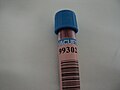 Tube vacuette
 -
 StaRRsed Inversa, automated Westergren based ESR analyzer


