Edikang ikong: Difference between revisions
CSV import |
CSV import |
||
| Line 42: | Line 42: | ||
[[Category:Soups]] | [[Category:Soups]] | ||
[[Category:Vegetable dishes]] | [[Category:Vegetable dishes]] | ||
<gallery> | |||
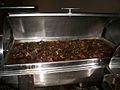
File:Edikaikong.JPG|Edikaikong | |||
</gallery> | |||
Latest revision as of 11:48, 25 February 2025
A traditional Nigerian vegetable soup
Edikang Ikong[edit]

Edikang Ikong is a traditional Nigerian vegetable soup that originates from the Efik and Ibibio people of Akwa Ibom State and Cross River State in southern Nigeria. It is a highly nutritious dish, often regarded as a delicacy, and is typically served at special occasions and celebrations.
Ingredients[edit]
The main ingredients of Edikang Ikong are fluted pumpkin leaves (known locally as "ugu") and waterleaf. These vegetables are rich in vitamins and minerals, contributing to the soup's nutritional value. Other essential ingredients include:
- Meat (such as beef, goat meat, or tripe)
- Fish (often stockfish or dried fish)
- Periwinkle
- Palm oil
- Onion
- Crayfish
- Pepper
- Seasoning cubes
- Salt
Preparation[edit]
The preparation of Edikang Ikong involves several steps to ensure the flavors are well developed. The process typically includes:
1. Boiling the Meat and Fish: The meat and fish are boiled with onions, seasoning cubes, and salt until tender. 2. Adding Vegetables: The waterleaf is added first, as it contains more water and cooks faster. After a few minutes, the fluted pumpkin leaves are added. 3. Incorporating Palm Oil and Crayfish: Palm oil is added to the pot, followed by ground crayfish and pepper to enhance the flavor. 4. Final Seasoning: The soup is allowed to simmer, and additional seasoning is adjusted to taste.
Cultural Significance[edit]
Edikang Ikong is more than just a meal; it is a symbol of hospitality and cultural identity among the Efik and Ibibio people. It is often prepared for guests and during festive periods, showcasing the rich culinary heritage of the region.
Serving[edit]
Edikang Ikong is traditionally served with swallow foods such as pounded yam, fufu, or eba. These starchy accompaniments help to balance the rich flavors of the soup.
Related pages[edit]
-
 Edikaikong
