Gold standard: Difference between revisions
CSV import Tags: mobile edit mobile web edit |
CSV import |
||
| Line 27: | Line 27: | ||
[[Category:Monetary Policy]] | [[Category:Monetary Policy]] | ||
[[Category:History of Banking]] | [[Category:History of Banking]] | ||
== Gold standard == | |||
<gallery> | |||
File:Two_20kr_gold_coins.png|Two 20kr gold coins | |||
File:Us-gold-certificate-1922.jpg|US gold certificate 1922 | |||
File:Sovereign_Victoria_1842_662015.jpg|Sovereign Victoria 1842 | |||
File:NNC-US-1849-G$20-Liberty_Head_(Twenty_D.).jpg|1849 Liberty Head Twenty Dollar | |||
File:1879S_Morgan_Dollar_NGC_MS67plus_Obverse.png|1879S Morgan Dollar NGC MS67plus Obverse | |||
File:Price_of_gold.webp|Price of gold | |||
File:McKinley_Prosperity.jpg|McKinley Prosperity | |||
File:Graph_charting_income_per_capita_throughout_the_Great_Depression.svg|Graph charting income per capita throughout the Great Depression | |||
File:Gold-nominal-constant-usd.svg|Gold nominal constant USD | |||
</gallery> | |||
Latest revision as of 21:33, 23 February 2025
Gold standard refers to a monetary system where a country's currency or paper money has a value directly linked to gold. With the gold standard, countries agreed to convert paper money into a fixed amount of gold. A country that uses the gold standard sets a fixed price for gold and buys and sells gold at that price. That fixed price is used to determine the value of the currency. For example, if the U.S. sets the price of gold at $500 an ounce, the value of the dollar would be 1/500th of an ounce of gold.
The gold standard is not currently used by any government. Britain stopped using the gold standard in 1931 and the U.S. followed suit in 1933 and abandoned the remnants of the system in 1973. The gold standard was completely replaced by fiat money, a term to describe currency that is used because of a government's order, or fiat, that the currency must be accepted as a means of payment.
History[edit]
The gold standard was first used in the United Kingdom in the 19th century as part of the Coinage Act 1816. The United States began to use a de facto gold standard in 1873 and adopted the gold standard de jure in 1900 with the passage of the Gold Standard Act.
Advantages and Disadvantages[edit]
The gold standard ensures the money supply can be regulated based on the gold reserves held by the central bank. This can reduce the risk of inflation. However, it also means the economy cannot respond to changes in the demand for money or economic activity. In addition, the gold standard can tie a country's economic health to the relative scarcity or abundance of gold, which can lead to economic instability if the gold supply changes.
See Also[edit]
References[edit]
<references />
 | |
|---|---|
 |
 |
Gold standard[edit]
-
 Two 20kr gold coins
 -
 US gold certificate 1922
 -
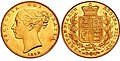 Sovereign Victoria 1842
 -
 1849 Liberty Head Twenty Dollar
 -
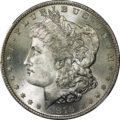 1879S Morgan Dollar NGC MS67plus Obverse
 -
 Price of gold
 -
 McKinley Prosperity
 -
 Graph charting income per capita throughout the Great Depression
 -
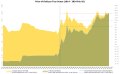 Gold nominal constant USD


.jpg)


