Salt mining: Difference between revisions
CSV import |
CSV import |
||
| Line 41: | Line 41: | ||
[[Category: Mining]] | [[Category: Mining]] | ||
[[Category: Salt]] | [[Category: Salt]] | ||
<gallery> | |||
File:Salt_mine_0096.jpg|Salt mine | |||
File:Salzbergwerk,_Deutschen_Museum.JPG|Salzbergwerk, Deutschen Museum | |||
File:Slanic_Salt_Mine.jpg|Slanic Salt Mine | |||
File:Crystal_Valley_(Khewra_Salt_Mines).JPG|Crystal Valley (Khewra Salt Mines) | |||
File:SaltMosque.JPG|Salt Mosque | |||
File:Large_hole_drilling_rig.jpg|Large hole drilling rig | |||
</gallery> | |||
Latest revision as of 21:37, 20 February 2025
Introduction[edit]
Salt mining is the process of extracting salt from underground salt deposits using various methods. The most common method is through conventional mining, solution mining, and solar evaporation. Salt is a valuable commodity for human consumption, industrial applications, and as a de-icing agent.
History of Salt Mining[edit]
The history of salt mining dates back to prehistoric times. Salt was a highly valued commodity not only for its flavor but also for its preservative properties. The earliest evidence of salt mining dates back to around 6000 BC in Romania and China.
Methods of Salt Mining[edit]
There are three main methods of salt mining: conventional mining, solution mining, and solar evaporation.
Conventional Mining[edit]
Conventional mining involves digging into the earth to reach the salt deposits. This method is often used when the salt is buried deep underground.
Solution Mining[edit]
Solution mining involves injecting water into the salt deposit. The water dissolves the salt, creating a brine that is then pumped to the surface and evaporated to leave behind the salt.
Solar Evaporation[edit]
Solar evaporation is the oldest method of salt production. It involves capturing and evaporating seawater in large, shallow ponds. The sun and wind evaporate the water, leaving behind the salt.
Locations of Salt Mines[edit]
Salt mines are found all over the world. Some of the largest and most productive mines are located in the United States, Canada, Germany, and Poland.
Uses of Salt[edit]
Salt is used in a variety of ways. It is a vital component in the human diet and is used in food preservation. In addition, it is used in a variety of industrial applications, including the production of chlorine and caustic soda, and as a de-icing agent.
Environmental Impact of Salt Mining[edit]
Like all mining activities, salt mining can have an environmental impact. This can include habitat destruction, water pollution, and soil erosion. However, many salt mining companies are working to reduce their environmental impact.
Conclusion[edit]
Salt mining is a vital industry that provides a crucial resource for human consumption and industrial use. Despite the environmental challenges, the industry continues to innovate and find ways to reduce its environmental footprint.
-
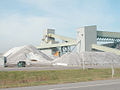 Salt mine
 -
 Salzbergwerk, Deutschen Museum
 -
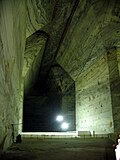 Slanic Salt Mine
 -
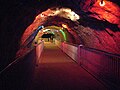 Crystal Valley (Khewra Salt Mines)
 -
 Salt Mosque
 -
 Large hole drilling rig


.JPG)


