Nasi kuning: Difference between revisions
CSV import Tags: mobile edit mobile web edit |
CSV import |
||
| (One intermediate revision by the same user not shown) | |||
| Line 1: | Line 1: | ||
{{Short description|Indonesian rice dish}} | |||
{{Use dmy dates|date=October 2023}} | |||
'''Nasi Kuning''' (Indonesian for "yellow rice") is a traditional Indonesian rice dish, characterized by its vibrant yellow color, which is derived from the use of [[turmeric]]. It is a popular dish in Indonesian cuisine, often served during special occasions and celebrations. | |||
Nasi Kuning is a | |||
==Ingredients and Preparation== | |||
Nasi Kuning is made by cooking rice with [[coconut milk]], [[turmeric]], and various spices, which give it a rich flavor and distinctive color. The basic ingredients include: | |||
* [[Rice]] | |||
* [[Coconut milk]] | |||
* [[Turmeric]] | |||
* [[Lemongrass]] | |||
* [[Bay leaves]] | |||
* [[Kaffir lime leaves]] | |||
* [[Salt]] | |||
The rice is typically rinsed and soaked before being cooked with the coconut milk and spices. The turmeric not only imparts a yellow hue but also adds a subtle earthy flavor. The coconut milk provides a creamy texture, making the rice rich and aromatic. | |||
==Cultural Significance== | ==Cultural Significance== | ||
Nasi Kuning holds a special place in Indonesian culture. It is often associated with celebrations such as birthdays, weddings, and other festive occasions. The yellow color symbolizes wealth, prosperity, and good fortune, making it a popular choice for ceremonial events. | |||
==Serving Suggestions== | |||
Nasi Kuning is usually served with a variety of side dishes, which may include: | |||
* [[Fried chicken]] or [[grilled chicken]] | |||
* [[Sambal]], a spicy chili paste | |||
* [[Tempeh]] or [[tofu]] | |||
* [[Boiled eggs]] | |||
* [[Fried shallots]] | |||
* [[Cucumber]] slices | |||
The dish is often presented in a cone shape, known as "tumpeng," which is a traditional way of serving Nasi Kuning during special events. | |||
== | ==Variations== | ||
While the basic recipe for Nasi Kuning remains consistent, there are regional variations across Indonesia. Some versions may include additional spices or ingredients, such as: | |||
* [[Pandan leaves]] for added fragrance | |||
* [[Galangal]] for a hint of spice | |||
* [[Cloves]] and [[cinnamon]] for a more complex flavor profile | |||
== | ==Related Pages== | ||
* [[Indonesian cuisine]] | * [[Indonesian cuisine]] | ||
* [[ | * [[Nasi Goreng]] | ||
* [[ | * [[Nasi Uduk]] | ||
* [[Tumpeng]] | |||
[[Category:Indonesian cuisine]] | [[Category:Indonesian cuisine]] | ||
[[Category:Rice dishes]] | [[Category:Rice dishes]] | ||
<gallery> | <gallery> | ||
File:Nasi_Kuning_Ibu_Sulastri.jpg|Nasi | File:Nasi_Kuning_Ibu_Sulastri.jpg|Nasi Kuning Ibu Sulastri | ||
File:Ritual_Birat_Sengkolo_Kejawen.jpg| | File:Ritual_Birat_Sengkolo_Kejawen.jpg|Ritual Birat Sengkolo Kejawen | ||
File:Tumpeng_Kompas_1.jpg| | File:Tumpeng_Kompas_1.jpg|Tumpeng Kompas | ||
File:BUMBU_NASI_KUNING_(tanpa_tulisan).png|Nasi | File:BUMBU_NASI_KUNING_(tanpa_tulisan).png|Bumbu Nasi Kuning | ||
File:Preparing_nasi_kuning.JPG|Nasi | File:Preparing_nasi_kuning.JPG|Preparing Nasi Kuning | ||
File:Nasi_Kuning_Breakfast.jpg|Nasi | File:Nasi_Kuning_Breakfast.jpg|Nasi Kuning Breakfast | ||
File:Nasi_Kuning_Banjar_001.jpg|Nasi | File:Nasi_Kuning_Banjar_001.jpg|Nasi Kuning Banjar | ||
File:Nasi_Kuning_Dendeng_Khas_Banjarmasin.jpg|Nasi | File:Nasi_Kuning_Dendeng_Khas_Banjarmasin.jpg|Nasi Kuning Dendeng Khas Banjarmasin | ||
File:Nasi_Kuning_Daun_Woka.jpg|Nasi | File:Nasi_Kuning_Daun_Woka.jpg|Nasi Kuning Daun Woka | ||
File:Nasi_kuning_kotak_box.jpg|Nasi | File:Nasi_kuning_kotak_box.jpg|Nasi Kuning Kotak Box | ||
File:Nasi_Kuning_Tawau.jpg|Nasi | File:Nasi_Kuning_Tawau.jpg|Nasi Kuning Tawau | ||
</gallery> | </gallery> | ||
Latest revision as of 21:29, 20 February 2025
Indonesian rice dish
Nasi Kuning (Indonesian for "yellow rice") is a traditional Indonesian rice dish, characterized by its vibrant yellow color, which is derived from the use of turmeric. It is a popular dish in Indonesian cuisine, often served during special occasions and celebrations.
Ingredients and Preparation[edit]
Nasi Kuning is made by cooking rice with coconut milk, turmeric, and various spices, which give it a rich flavor and distinctive color. The basic ingredients include:
The rice is typically rinsed and soaked before being cooked with the coconut milk and spices. The turmeric not only imparts a yellow hue but also adds a subtle earthy flavor. The coconut milk provides a creamy texture, making the rice rich and aromatic.
Cultural Significance[edit]
Nasi Kuning holds a special place in Indonesian culture. It is often associated with celebrations such as birthdays, weddings, and other festive occasions. The yellow color symbolizes wealth, prosperity, and good fortune, making it a popular choice for ceremonial events.
Serving Suggestions[edit]
Nasi Kuning is usually served with a variety of side dishes, which may include:
- Fried chicken or grilled chicken
- Sambal, a spicy chili paste
- Tempeh or tofu
- Boiled eggs
- Fried shallots
- Cucumber slices
The dish is often presented in a cone shape, known as "tumpeng," which is a traditional way of serving Nasi Kuning during special events.
Variations[edit]
While the basic recipe for Nasi Kuning remains consistent, there are regional variations across Indonesia. Some versions may include additional spices or ingredients, such as:
- Pandan leaves for added fragrance
- Galangal for a hint of spice
- Cloves and cinnamon for a more complex flavor profile
Related Pages[edit]
-
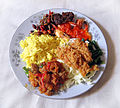 Nasi Kuning Ibu Sulastri
 -
 Ritual Birat Sengkolo Kejawen
 -
 Tumpeng Kompas
 -
 Bumbu Nasi Kuning
 -
 Preparing Nasi Kuning
 -
 Nasi Kuning Breakfast
 -
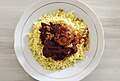 Nasi Kuning Banjar
 -
 Nasi Kuning Dendeng Khas Banjarmasin
 -
 Nasi Kuning Daun Woka
 -
 Nasi Kuning Kotak Box
 -
 Nasi Kuning Tawau


.png)


