Bistek: Difference between revisions
CSV import |
CSV import |
||
| Line 29: | Line 29: | ||
{{Philippine-cuisine-stub}} | {{Philippine-cuisine-stub}} | ||
{{food-stub}} | {{food-stub}} | ||
<gallery> | |||
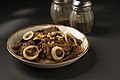
File:Bistek_Tagalog_DSCF3899.jpg|Bistek | |||
</gallery> | |||
Latest revision as of 21:19, 20 February 2025
Bistek or Bistec is a traditional Filipino dish that is popular in various regions of the Philippines. It is a savory dish that is typically made with beef, onions, and soy sauce. The name "Bistek" is derived from the English words "beef steak," although the Filipino version is a far cry from the thick, juicy cuts of beef typically associated with traditional Western steaks.
History[edit]
The origins of Bistek can be traced back to the Spanish colonial period in the Philippines, which lasted from the 16th to the 19th centuries. The dish is believed to have been influenced by Spanish cuisine, particularly the Spanish dish bistec encebollado, which is a beef steak cooked with onions.
Preparation[edit]
Bistek is typically made with thinly sliced beef marinated in soy sauce and calamansi juice, a type of citrus fruit native to the Philippines. The beef is then pan-fried and served with the marinade, which is reduced to a sauce. The dish is typically garnished with rings of onion, which are cooked until they are soft and caramelized.
Variations[edit]
There are several variations of Bistek across the different regions of the Philippines. Some versions use pork or chicken instead of beef, while others add additional ingredients like bell peppers or mushrooms. In the Visayas region, a version of Bistek known as Bistek Tagalog is popular, which includes a topping of fried onion rings.
Cultural Significance[edit]
Bistek is a staple dish in many Filipino households and is often served at family gatherings and celebrations. It is also commonly found on the menus of Filipino restaurants both in the Philippines and abroad.
See Also[edit]


-
 Bistek

