Mucoadhesion: Difference between revisions
CSV import |
CSV import |
||
| Line 24: | Line 24: | ||
{{pharmacology-stub}} | {{pharmacology-stub}} | ||
== Mucoadhesion == | |||
<gallery> | |||
File:Mucoadhesion Fracture Theory (fixed).png|Mucoadhesion Fracture Theory | |||
File:Mucoadhesion before and after hydrating mucus.png|Mucoadhesion Before and After Hydrating Mucus | |||
File:Mucoadhesion Interpenetration.png|Mucoadhesion Interpenetration | |||
File:FlattenedRoundPills.jpg|Flattened Round Pills | |||
File:Contraceptivepatch.jpg|Contraceptive Patch | |||
</gallery> | |||
Latest revision as of 01:17, 20 February 2025
Mucoadhesion is a process by which a material binds to the mucosal layer of the body. This process is of significant interest in the field of pharmaceutics and drug delivery, as it can enhance the effectiveness of a drug by prolonging its residence time at the site of action or absorption.
Mechanism of Mucoadhesion[edit]
The mechanism of mucoadhesion involves several stages. Initially, the mucoadhesive material comes into close contact with the mucosal surface, facilitated by the wetting and swelling properties of the material. This is followed by the penetration of the material into the mucus layer, and finally, the formation of chemical or mechanical bonds with the mucus, leading to adhesion.
The adhesion strength depends on various factors, including the properties of the mucoadhesive material, the characteristics of the mucus, and the conditions at the site of adhesion, such as pH and temperature.
Applications of Mucoadhesion[edit]
Mucoadhesion has a wide range of applications in the medical and pharmaceutical fields. It is used in the design of drug delivery systems to improve the bioavailability of drugs, particularly in oral drug delivery, ocular drug delivery, and nasal drug delivery. Mucoadhesive materials can also be used in the formulation of medical devices, such as dental implants and contact lenses, to improve their retention and comfort.
Mucoadhesive Materials[edit]
A variety of materials can exhibit mucoadhesive properties, including natural polymers like chitosan and alginate, synthetic polymers like poly(acrylic acid) and poly(vinyl alcohol), and modified polymers like thiolated polymers. The choice of material depends on the specific application and the desired properties of the mucoadhesive system.
Challenges and Future Directions[edit]
Despite the potential benefits of mucoadhesion, there are several challenges in its application. These include the variability of the mucus layer, the potential for mucus turnover to limit the duration of adhesion, and the need for careful formulation to ensure biocompatibility and safety. Future research in this field is likely to focus on developing new mucoadhesive materials and systems, and on improving our understanding of the mechanisms of mucoadhesion.

Mucoadhesion[edit]
-
Mucoadhesion Fracture Theory
-
Mucoadhesion Before and After Hydrating Mucus
-
Mucoadhesion Interpenetration
-
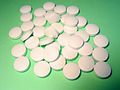 Flattened Round Pills
 -
Contraceptive Patch

.png)


