Ageing: Difference between revisions
No edit summary |
CSV import |
||
| (One intermediate revision by the same user not shown) | |||
| Line 1: | Line 1: | ||
Ageing | |||
Ageing, also spelled aging, is the process of becoming older, a process that is genetically determined and environmentally modulated. In humans, ageing represents the accumulation of changes in a human being over time, encompassing physical, psychological, and social changes. Some dimensions of ageing grow and expand over time, while others decline. | |||
== | == Biological Aspects of Ageing == | ||
The biological process of ageing is complex and involves multiple factors. It is characterized by the gradual deterioration of cellular and molecular structures, leading to a decline in physiological function and increased vulnerability to diseases. | |||
== | === Cellular Senescence === | ||
[[Cellular senescence]] refers to the phenomenon where cells lose the ability to divide and grow. This is a natural part of the ageing process and is thought to contribute to the decline in tissue function associated with ageing. Senescent cells can accumulate in tissues over time, leading to inflammation and tissue dysfunction. | |||
=== Telomere Shortening === | |||
[[Telomeres]] are repetitive nucleotide sequences at the ends of chromosomes that protect them from deterioration. Each time a cell divides, telomeres shorten, eventually leading to cellular senescence or apoptosis when they become too short. Telomere shortening is considered a hallmark of ageing. | |||
[[ | |||
[[Category: Ageing]] | === Oxidative Stress === | ||
[[Category: | |||
[[Category: Biology | [[Oxidative stress]] is caused by an imbalance between the production of reactive oxygen species (ROS) and the body's ability to detoxify these reactive intermediates. Over time, oxidative stress can damage cellular components, including DNA, proteins, and lipids, contributing to the ageing process. | ||
== Psychological Aspects of Ageing == | |||
Ageing also affects cognitive functions, although the extent and nature of these changes can vary widely among individuals. | |||
=== Cognitive Decline === | |||
Cognitive decline is a common aspect of ageing, affecting memory, attention, and executive functions. However, not all cognitive abilities decline with age; some, such as vocabulary and general knowledge, may remain stable or even improve. | |||
=== Mental Health === | |||
Ageing can also impact mental health, with older adults experiencing higher risks of conditions such as [[depression]] and [[anxiety]]. Social factors, such as isolation and loss of loved ones, can exacerbate these issues. | |||
== Social Aspects of Ageing == | |||
The social implications of ageing are significant, affecting both individuals and society as a whole. | |||
=== Retirement === | |||
Retirement is a major life transition associated with ageing. It can have both positive and negative effects on an individual's well-being, depending on factors such as financial security, health, and social support. | |||
=== Ageism === | |||
[[Ageism]] refers to stereotypes, prejudice, and discrimination against individuals based on their age. It can affect older adults' access to healthcare, employment, and social services. | |||
== Theories of Ageing == | |||
Several theories have been proposed to explain the mechanisms of ageing, including: | |||
=== Programmed Theories === | |||
Programmed theories suggest that ageing follows a biological timetable, possibly a continuation of the one that regulates childhood growth and development. Examples include the [[genetic theory of ageing]] and the [[endocrine theory]]. | |||
=== Damage or Error Theories === | |||
These theories propose that ageing results from accumulated damage to cells and tissues over time. Examples include the [[free radical theory of ageing]] and the [[wear and tear theory]]. | |||
== Also see == | |||
* [[Gerontology]] | |||
* [[Longevity]] | |||
* [[Life expectancy]] | |||
* [[Anti-ageing medicine]] | |||
* [[Biogerontology]] | |||
{{Ageing}} | |||
[[Category:Ageing]] | |||
[[Category:Gerontology]] | |||
[[Category:Biology]] | |||
<gallery> | |||
File:Hydras (8).JPG|Ageing | |||
File:Senescence.JPG|Ageing | |||
File:Age dynamics of the body mass.svg|Ageing | |||
File:Alzheimer's disease brain comparison.jpg|Ageing | |||
File:Old woman with young baby boy.JPG|Ageing | |||
File:Nowruz 2017 in Bisaran, Kurdistan province.jpg|Ageing | |||
File:003 p4 dd.JPG|Ageing | |||
File:2017 world map, median age by country.svg|Ageing | |||
File:Menneske Aldrene (C. W. Eckersberg).png|Ageing | |||
File:Healthcare expenditures in Japan by Age.svg|Ageing | |||
</gallery> | |||
Latest revision as of 01:10, 20 February 2025
Ageing
Ageing, also spelled aging, is the process of becoming older, a process that is genetically determined and environmentally modulated. In humans, ageing represents the accumulation of changes in a human being over time, encompassing physical, psychological, and social changes. Some dimensions of ageing grow and expand over time, while others decline.
Biological Aspects of Ageing[edit]
The biological process of ageing is complex and involves multiple factors. It is characterized by the gradual deterioration of cellular and molecular structures, leading to a decline in physiological function and increased vulnerability to diseases.
Cellular Senescence[edit]
Cellular senescence refers to the phenomenon where cells lose the ability to divide and grow. This is a natural part of the ageing process and is thought to contribute to the decline in tissue function associated with ageing. Senescent cells can accumulate in tissues over time, leading to inflammation and tissue dysfunction.
Telomere Shortening[edit]
Telomeres are repetitive nucleotide sequences at the ends of chromosomes that protect them from deterioration. Each time a cell divides, telomeres shorten, eventually leading to cellular senescence or apoptosis when they become too short. Telomere shortening is considered a hallmark of ageing.
Oxidative Stress[edit]
Oxidative stress is caused by an imbalance between the production of reactive oxygen species (ROS) and the body's ability to detoxify these reactive intermediates. Over time, oxidative stress can damage cellular components, including DNA, proteins, and lipids, contributing to the ageing process.
Psychological Aspects of Ageing[edit]
Ageing also affects cognitive functions, although the extent and nature of these changes can vary widely among individuals.
Cognitive Decline[edit]
Cognitive decline is a common aspect of ageing, affecting memory, attention, and executive functions. However, not all cognitive abilities decline with age; some, such as vocabulary and general knowledge, may remain stable or even improve.
Mental Health[edit]
Ageing can also impact mental health, with older adults experiencing higher risks of conditions such as depression and anxiety. Social factors, such as isolation and loss of loved ones, can exacerbate these issues.
Social Aspects of Ageing[edit]
The social implications of ageing are significant, affecting both individuals and society as a whole.
Retirement[edit]
Retirement is a major life transition associated with ageing. It can have both positive and negative effects on an individual's well-being, depending on factors such as financial security, health, and social support.
Ageism[edit]
Ageism refers to stereotypes, prejudice, and discrimination against individuals based on their age. It can affect older adults' access to healthcare, employment, and social services.
Theories of Ageing[edit]
Several theories have been proposed to explain the mechanisms of ageing, including:
Programmed Theories[edit]
Programmed theories suggest that ageing follows a biological timetable, possibly a continuation of the one that regulates childhood growth and development. Examples include the genetic theory of ageing and the endocrine theory.
Damage or Error Theories[edit]
These theories propose that ageing results from accumulated damage to cells and tissues over time. Examples include the free radical theory of ageing and the wear and tear theory.
Also see[edit]
| Ageing | ||||||||
|---|---|---|---|---|---|---|---|---|
|
-
 Ageing
 -
 Ageing
 -
 Ageing
 -
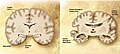 Ageing
 -
 Ageing
 -
 Ageing
 -
 Ageing
 -
 Ageing
 -
 Ageing
 -
 Ageing
.JPG)


.png)

