Jinn: Difference between revisions
CSV import |
CSV import |
||
| Line 34: | Line 34: | ||
[[Category:Supernatural beings]] | [[Category:Supernatural beings]] | ||
{{Myth-stub}} | {{Myth-stub}} | ||
<gallery> | |||
File:Shah_Namah,_the_Persian_Epic_of_the_Kings_Wellcome_L0035191.jpg|Jinn | |||
File:Blessing_genie_Dur_Sharrukin.jpg|Jinn | |||
File:Naskh_script_-_Qur'anic_verses.jpg|Jinn | |||
File:Royal_figure_enthroned_and_surrounded_by_Jinn_of_the_Earth.png|Jinn | |||
File:The_Singer_Ibrahim_and_the_jinn_(cropped).jpg|Jinn | |||
File:Jinn_of_the_Air_in_Seljuk_arts.png|Jinn | |||
File:Majlis_al_Jinn_-_Descending_into_cave.jpg|Jinn | |||
File:West_Gate_Of_Firoz_Shah's_Cotillah,_Delhi_-_British_Library_.X768-2(11)jpg.jpg|Jinn | |||
File:Porte_citadelle_alep_(arch).jpg|Jinn | |||
File:Jinn_Carrying_Solomon's_Throne.png|Jinn | |||
File:Tawiz.jpg|Jinn | |||
File:Red_Jinn-King_of_Tuesday.png|Jinn | |||
</gallery> | |||
Latest revision as of 12:24, 18 February 2025
Jinn (also spelled Djinn or Genies) are supernatural beings originating from pre-Islamic Arabian religion and later Islamic mythology and theology. According to these traditions, jinn are invisible entities that inhabit an unseen world in dimensions beyond the visible universe of humans. Throughout Islamic history, jinn have been characters in folklore and are often mentioned in the Quran, where they are considered to be beings created from a smokeless and "scorching fire" but are also physical in nature, being able to interact in a tangible manner with people and objects and likewise be acted upon.
Etymology and Definitions[edit]
The word jinn comes from the Arabic root j-n-n meaning "to hide" or "to be hidden". This root defines beings that are concealed from the senses. Traditionally, the singular is jinni or djinni and the plural is jinn or djinn.
In Islamic Theology[edit]
In Islamic theology, jinn are acknowledged as creatures with free will, made from smokeless fire by Allah as humans were made of clay, according to the Quran (Surah 15:27). Unlike humans, jinn live for thousands of years but are not immortal. They eat, drink, procreate, and are subject to death. Jinn can be good, evil, or neutrally benevolent and hence have free will like humans and are responsible for their actions in the afterlife.
The existence of jinn is taken very seriously and literally in Islamic culture and theology. The Quran mentions that Muhammad was sent as a prophet to both "humanity and jinn," and verses in the Quran mention the conversion of jinn to Islam. Jinn are also mentioned in various hadiths, where they are noted to be accountable for their deeds and capable of forming communities much like humans.
Jinn in Folklore[edit]
In folklore, jinn are often depicted as powerful beings with the ability to shape-shift, become invisible, and possess humans or animals. Stories of jinn can be found in various cultures across the Middle East, North Africa, and South Asia. They are a common theme in Arabian Nights, where they are often depicted as trapped in bottles or lamps and capable of granting wishes.
Types of Jinn[edit]
Islamic tradition categorizes jinn into several types, including but not limited to:
- Ifrit: Often depicted as powerful and rebellious
- Marid: Known for their strength and ability to grant wishes
- Jann: Generally considered to be the weakest of jinn
- Shaitan: Often equated with demons or devils, these are the jinn who have turned evil
Protection Against Jinn[edit]
Islamic teachings and traditions provide several methods to protect oneself from the harm of jinn, including reciting certain chapters from the Quran, invoking the name of Allah, and following specific daily rituals to keep them at bay.
Modern Interpretations and Beliefs[edit]
Belief in jinn is still present in many parts of the Islamic world, where they are considered part of spiritual life. In modern times, interpretations of jinn have varied, ranging from symbolic representations of inner psychological states to literal beliefs in their physical existence.
See Also[edit]

-
 Jinn
Jinn -
 Jinn
Jinn -
 Jinn
Jinn -
 Jinn
Jinn -
 Jinn
Jinn -
 Jinn
Jinn -
 Jinn
Jinn -
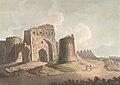 Jinn
Jinn -
 Jinn
Jinn -
 Jinn
Jinn -
 Jinn
Jinn -
 Jinn
Jinn


.jpg)


jpg.jpg)
.jpg)


