Soup kitchen: Difference between revisions
CSV import |
CSV import |
||
| Line 33: | Line 33: | ||
{{Food-stub}} | {{Food-stub}} | ||
{{Social-issues-stub}} | {{Social-issues-stub}} | ||
<gallery> | |||
File:MontrealSoupKitchen1931.jpg|Soup kitchen in Montreal, 1931 | |||
File:Count_Rumford.jpg|Count Rumford | |||
File:Unemployed_men_queued_outside_a_depression_soup_kitchen_opened_in_Chicago_by_Al_Capone,_02-1931_-_NARA_-_541927.jpg|Unemployed men queued outside a depression soup kitchen opened in Chicago by Al Capone, 1931 | |||
File:Ollas_comunes_en_1932.jpg|Soup kitchen in 1932 | |||
File:Queue_outside_a_soup_kitchen_at_Klostertorv_in_Ålborg_1943.jpg|Queue outside a soup kitchen at Klostertorv in Ålborg, 1943 | |||
File:Goldener_Tempel_Amritsar_2022-11-21_4.jpg|Soup kitchen at the Golden Temple, Amritsar | |||
File:US_Navy_090806-N-6220J-004_Sailors_and_Navy_Delayed_Entry_Program_members_serve_breakfast_to_homeless_men_and_women_at_Dorothy's_Soup_Kitchen_in_Salinas,_Calif._during_Salinas_Navy_Week_community_service_event.jpg|Sailors serving breakfast at Dorothy's Soup Kitchen in Salinas, Calif. | |||
</gallery> | |||
Latest revision as of 11:53, 18 February 2025
Soup Kitchen
A Soup Kitchen is a place where food, usually soup and bread, is served to those who are in need, often for free or at a very low cost. Soup kitchens are typically run by volunteers and are often associated with charitable organizations or religious institutions.
History[edit]
The concept of a soup kitchen dates back to the Middle Ages, when monasteries would serve food to the poor. The term "soup kitchen" itself originated during the Great Depression in the United States, when such establishments became a common sight in many cities.
Function[edit]
Soup kitchens serve a vital role in many communities, providing meals for those who cannot afford to feed themselves or their families. They are often located in areas with high rates of homelessness or poverty. In addition to serving food, some soup kitchens also offer other services, such as job training or health screenings.
Operation[edit]
Soup kitchens rely heavily on donations of food and money, as well as volunteer labor. Many are run by non-profit organizations, religious groups, or community organizations. Some soup kitchens operate every day, while others only open on certain days of the week.
Impact[edit]
The impact of soup kitchens is significant. They not only provide a basic human need - food - but also offer a sense of community and dignity to those who may be experiencing difficult times. Soup kitchens can also play a role in reducing food waste, as they often use donated food that would otherwise be thrown away.
See Also[edit]


This social-issues related article is a stub. You can help WikiMD by expanding it.
-
 Soup kitchen in Montreal, 1931
 -
 Count Rumford
 -
 Unemployed men queued outside a depression soup kitchen opened in Chicago by Al Capone, 1931
 -
 Soup kitchen in 1932
 -
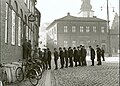 Queue outside a soup kitchen at Klostertorv in Ålborg, 1943
 -
 Soup kitchen at the Golden Temple, Amritsar
 -
 Sailors serving breakfast at Dorothy's Soup Kitchen in Salinas, Calif.


