International System of Units: Difference between revisions
CSV import |
CSV import |
||
| Line 27: | Line 27: | ||
{{stub}} | {{stub}} | ||
<gallery> | |||
File:SI_Illustration_Base_Units_and_Constants_Colour_Full.svg|SI Base Units and Constants | |||
File:Physics_measurements_SI_units.png|Physics Measurements in SI Units | |||
File:981ms2.png|Acceleration due to Gravity | |||
File:Silicon_sphere_for_Avogadro_project.jpg|Silicon Sphere for Avogadro Project | |||
File:Metric_and_imperial_systems_(2019).svg|Metric and Imperial Systems | |||
File:Alter_Grenzstein_Pontebba_01.jpg|International System of Units | |||
File:US_National_Length_Meter.JPG|US National Length Meter | |||
File:Unit_relations_in_the_new_SI.svg|Unit Relations in the New SI | |||
File:CubeLitre.svg|Cube Litre | |||
</gallery> | |||
Latest revision as of 11:40, 18 February 2025
International System of Units (SI) is the modern form of the metric system and is the most widely used system of measurement. It comprises a coherent system of units of measurement built on seven base units, which are the second, meter, kilogram, ampere, kelvin, mole, and candela.
History[edit]
The International System of Units was developed from the metric system at the General Conference on Weights and Measures (CGPM) in 1960. The conference recognized the need for a single, coherent system of units that could be used worldwide. The SI system was designed to be as simple and consistent as possible, and to be applicable to all fields of science and technology.
Base Units[edit]
The SI system is based on seven base units, which are the second (s), meter (m), kilogram (kg), ampere (A), kelvin (K), mole (mol), and candela (cd). These units are defined in terms of constants of nature and are intended to be as stable and reproducible as possible.
Derived Units[edit]
In addition to the base units, the SI system includes a number of derived units, which are formed by combining the base units according to the rules of algebra. Examples of derived units include the newton (N), which is a unit of force, and the joule (J), which is a unit of energy.
Symbols and Prefixes[edit]
Each unit in the SI system has a symbol, and these symbols are used in combination with prefixes to indicate multiples and submultiples of the units. For example, the prefix kilo- (k) indicates a multiple of 1000, so a kilometer is 1000 meters.
See Also[edit]
References[edit]
- Bureau International des Poids et Mesures (2019). The International System of Units (SI) (9th ed.). ISBN 978-92-822-2272-0.
 | |
|---|---|
 |
 |
-
 SI Base Units and Constants
 -
 Physics Measurements in SI Units
 -
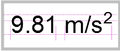 Acceleration due to Gravity
 -
 Silicon Sphere for Avogadro Project
 -
 Metric and Imperial Systems
 -
 International System of Units
 -
 US National Length Meter
 -
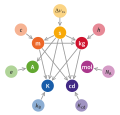 Unit Relations in the New SI
 -
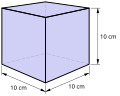 Cube Litre


.svg)


