Discouraged worker: Difference between revisions
CSV import |
CSV import |
||
| Line 30: | Line 30: | ||
{{Economics-stub}} | {{Economics-stub}} | ||
{{Labor-stub}} | {{Labor-stub}} | ||
<gallery> | |||
File:Distribution_of_the_civilian_noninstitutional_population_16_years_and_older_first_quarter_2009.png|Distribution of the civilian noninstitutional population 16 years and older, first quarter 2009 | |||
File:Persons_not_in_the_labor_force_selected_indicators_quarterly_averages_1994–2009_not_seasonally_adjusted.png|Persons not in the labor force, selected indicators, quarterly averages 1994–2009, not seasonally adjusted | |||
File:Unemployed.jpg|Discouraged worker | |||
File:Ranks_of_Discouraged_Workers_and_Others_Marginally_Attached_to_the_Labor_Force_Rise_During_Recession_Issues_in_Labor_Statistics_issue_in_labor_stats_apr2009.gif|Ranks of discouraged workers and others marginally attached to the labor force rise during recession | |||
</gallery> | |||
Latest revision as of 11:26, 18 February 2025
Discouraged worker is a term used in labor economics to describe individuals who are eligible for employment but are not currently seeking work due to the belief that no jobs are available for them. The concept of the discouraged worker is significant in the study of unemployment and labor force participation.
Definition[edit]
A discouraged worker is defined by the International Labour Organization (ILO) as a person of working age who is not in employment, is available to work, but has not sought work in the last four weeks because they believe no jobs are available to them. This definition is used by many countries, including the United States, in their official labor statistics.
Causes[edit]
Discouraged workers may become so due to a variety of reasons. These can include long-term unemployment, repeated rejections for jobs, perceived discrimination in the labor market, or a lack of necessary skills or qualifications. The phenomenon is often associated with periods of high unemployment or economic recession.
Impact[edit]
The existence of discouraged workers can lead to a lower reported unemployment rate, as these individuals are not counted as part of the labor force under standard definitions. This can lead to an underestimation of the true level of unemployment in an economy. Discouraged workers can also represent a loss of potential productivity and economic output.
Policy Responses[edit]
Policies to address the issue of discouraged workers can include measures to improve the transparency and accessibility of job vacancies, training and skills development programs, and initiatives to tackle discrimination in the labor market.
See Also[edit]


-
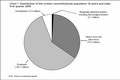 Distribution of the civilian noninstitutional population 16 years and older, first quarter 2009
 -
 Persons not in the labor force, selected indicators, quarterly averages 1994–2009, not seasonally adjusted
 -
 Discouraged worker
 -
 Ranks of discouraged workers and others marginally attached to the labor force rise during recession


