Waterboarding: Difference between revisions
CSV import |
CSV import |
||
| Line 29: | Line 29: | ||
[[Category:Controversies]] | [[Category:Controversies]] | ||
[[Category:Law enforcement techniques]] | [[Category:Law enforcement techniques]] | ||
<gallery> | |||
File:Waterboarding_a_captured_North_Vietnamese_soldier_near_Da_Nang.jpeg|Waterboarding a captured North Vietnamese soldier near Da Nang | |||
File:Waterboarding.jpg|Waterboarding | |||
File:Water_cure.jpg|Water cure | |||
File:amboyna.jpg|Amboyna | |||
File:Life_05-22-1902.JPG|Life magazine cover from May 22, 1902 | |||
File:WaterboardWithCanKhmerRouge.jpg|Waterboard with can used by Khmer Rouge | |||
File:Waterboarding_From_The_Inquisition_To_Guantanamo.jpg|Waterboarding from the Inquisition to Guantanamo | |||
</gallery> | |||
Latest revision as of 11:14, 18 February 2025
Waterboarding is a controversial interrogation technique that involves the simulated drowning of a person by pouring water over their face and breathing passages. It has been used as a form of torture and interrogation method by various governments and organizations. This article provides an overview of waterboarding, its history, controversies, and legal implications.
History[edit]
Waterboarding has a long history and has been used in different forms throughout the centuries. Its origins can be traced back to ancient times, where it was used as a method of punishment and interrogation. However, the modern form of waterboarding, as we know it today, emerged during the Spanish Inquisition in the 15th century.
During the Spanish Inquisition, waterboarding was known as "tortura de agua" and was used to extract confessions from individuals accused of heresy. The technique involved strapping the victim to a board, tilting it to a downward angle, and then pouring water over their face, causing a sensation of drowning.
Controversies[edit]
Waterboarding has sparked intense debates and controversies due to its nature as a form of torture. Critics argue that it violates human rights, including the prohibition of torture under international law. They claim that it inflicts severe physical and psychological suffering on the victim, leaving long-lasting trauma.
Proponents of waterboarding argue that it is an effective interrogation technique that can elicit valuable information from suspects. They claim that it does not cause any long-term harm and is necessary for national security purposes. However, these claims are highly disputed, and many experts argue that the information obtained through waterboarding is often unreliable due to the extreme duress experienced by the victim.
Legal Implications[edit]
The legality of waterboarding is a subject of much debate. International human rights organizations, such as Amnesty International and Human Rights Watch, consider waterboarding to be a form of torture and a violation of the United Nations Convention Against Torture. The use of waterboarding is strictly prohibited under international law.
In the United States, waterboarding became a topic of controversy during the War on Terror. It was revealed that the Central Intelligence Agency (CIA) had used waterboarding as an interrogation technique on suspected terrorists. This sparked a heated debate about the legality and morality of such practices. In 2009, the Obama administration officially banned the use of waterboarding by U.S. personnel.
See Also[edit]
References[edit]
<references/>
-
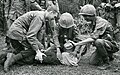 Waterboarding a captured North Vietnamese soldier near Da Nang
 -
 Waterboarding
 -
 Water cure
 -
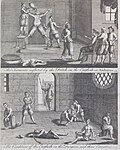 Amboyna
 -
 Life magazine cover from May 22, 1902
 -
 Waterboard with can used by Khmer Rouge
 -
 Waterboarding from the Inquisition to Guantanamo


