Aster yellows: Difference between revisions
CSV import Tags: mobile edit mobile web edit |
CSV import |
||
| Line 21: | Line 21: | ||
[[Category:Bacterial diseases]] | [[Category:Bacterial diseases]] | ||
{{plant-disease-stub}} | {{plant-disease-stub}} | ||
<gallery> | |||
File:Aster_yellows_symptoms_carrot.jpg|Aster yellows symptoms on carrot | |||
File:Aster_yellows_symptoms_carrot_2.jpg|Aster yellows symptoms on carrot | |||
File:Aster_leafhopper.jpg|Aster leafhopper | |||
File:Phyllody_on_Coneflower_with_aster_yellows.jpg|Phyllody on coneflower with aster yellows | |||
</gallery> | |||
Latest revision as of 05:02, 18 February 2025
Aster yellows is a plant disease caused by the Candidatus Phytoplasma asteris, a bacteria that affects over 300 species of plants, including economically important crops. The disease is spread by leafhoppers, which acquire the bacteria while feeding on infected plants and transmit it to healthy plants.
Symptoms[edit]
The symptoms of aster yellows vary depending on the plant species and its stage of growth when infected. Common symptoms include yellowing or reddening of leaves, stunted growth, and the production of green, leaf-like structures in place of flowers. In some cases, the plant may exhibit a "witches' broom" effect, where the ends of the branches proliferate excessively, creating a broom-like appearance.
Transmission[edit]
Aster yellows is primarily transmitted by leafhoppers, particularly the species Macrosteles quadrilineatus. The bacteria are acquired by the leafhoppers when they feed on an infected plant. The bacteria then multiply in the insect's body and can be transmitted to other plants when the leafhopper feeds again. The disease can also be spread through the use of infected plant material, such as seeds or cuttings.
Management[edit]
Management of aster yellows involves a combination of strategies, including the use of resistant plant varieties, control of leafhopper populations, and the removal and destruction of infected plants. Chemical control methods, such as the use of insecticides, can also be effective, but should be used as a last resort due to their potential environmental impact.
Impact[edit]
Aster yellows can have a significant economic impact, particularly on crops such as carrots, celery, and lettuce, which can suffer yield losses of up to 50% if infected. The disease can also affect ornamental plants, reducing their aesthetic value and making them unsuitable for sale.
See also[edit]

This article is a plant disease stub. You can help WikiMD by expanding it!
-
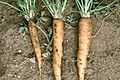 Aster yellows symptoms on carrot
 -
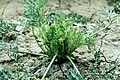 Aster yellows symptoms on carrot
 -
 Aster leafhopper
 -
 Phyllody on coneflower with aster yellows


