Malted milk: Difference between revisions
CSV import |
CSV import Tags: mobile edit mobile web edit |
||
| Line 30: | Line 30: | ||
[[Category:19th-century inventions]] | [[Category:19th-century inventions]] | ||
{{Food-stub}} | {{Food-stub}} | ||
<gallery> | |||
File:Malted_Milk_Can.jpg|Malted milk can | |||
File:William_Horlick_Portrait.JPG|Portrait of William Horlick | |||
File:Leffingwell_USGS_lek00253.jpg|Leffingwell USGS image | |||
</gallery> | |||
Latest revision as of 02:11, 18 February 2025
Malted Milk
Malted milk is a powdered gruel made from a mixture of malted barley, wheat flour, and evaporated whole milk. The product was developed by William Horlick, a food manufacturer from Racine, Wisconsin, in the late 19th century as an easily digestible restorative health drink for children and invalids, and as an everyday convenience food for healthy people with a busy lifestyle.
History[edit]
The development of malted milk goes back to the 1860s when William Horlick, a pharmacist, emigrated from England to the United States. He joined forces with his brother James, a physician, and they began experimenting with a new formula for a nutritious, easily digestible, non-perishable drink for infants, invalids and the elderly. In 1883, they patented a process for making malted milk. The product, originally called Diastoid, soon became popular as an infant food and to enhance the diets of convalescents, the elderly, and outdoor explorers.
Production[edit]
The production of malted milk involves a series of steps. First, barley is soaked in water and allowed to germinate, producing enzymes that convert the grain's starches into sugars. This process, known as malting, also involves drying and crushing the grain to produce malt powder. The malt is then mixed with wheat flour and milk, which is evaporated to form a powder.
Uses[edit]
Malted milk is used in a variety of ways. It is often mixed with water or milk to make a beverage, used as a flavoring in baking and confectionery, and added to milkshakes to give them a richer flavor and creamier texture. It is also used in the production of malted milk balls, a type of candy.
Health Benefits[edit]
Malted milk is a good source of essential nutrients, including protein, vitamins, and minerals. It is high in B vitamins, particularly vitamin B-12 and riboflavin, and provides a good amount of calcium and vitamin D. It also contains a significant amount of dietary fiber, which can aid digestion.
See Also[edit]

-
 Malted milk can
 -
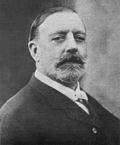 Portrait of William Horlick
 -
 Leffingwell USGS image


